" transform="translate(1.334 2)" width="13.333314731408331px"/><path d="M 0 2.667 L 0 0" fill="transparent" height="2.666640000000001px" id="nlKB6m7XS" stroke-dasharray="" stroke-linecap="round" stroke-linejoin="round" stroke-width="1" stroke="rgb(255, 255, 255)" transform="translate(8 8.667)" width="1px"/><path d="M 0.167 0.167 L 0.25 0.167 M 0.333 0.167 C 0.333 0.075 0.259 0 0.167 0 C 0.075 0 0 0.075 0 0.167 C 0 0.259 0.075 0.333 0.167 0.333 C 0.259 0.333 0.333 0.259 0.333 0.167 Z" fill="transparent" height="1px" id="G0jsljuaP" stroke-dasharray="" stroke-linecap="round" stroke-linejoin="round" stroke-width="1" stroke="rgb(255, 255, 255)" transform="translate(7.834 6)" width="1px"/></svg>)
" transform="translate(4 4)" width="8px"/></svg>)
When to Get Married in Iceland: Seasons, Weather & Light
Is there anything more romantic than tying the knot in a faraway destination? Saying “I do” is (hopefully) a once-in-a-lifetime experience, and Iceland offers the breathtaking backdrop you deserve. The only question is timing: when does the Iceland wedding season begin and end?
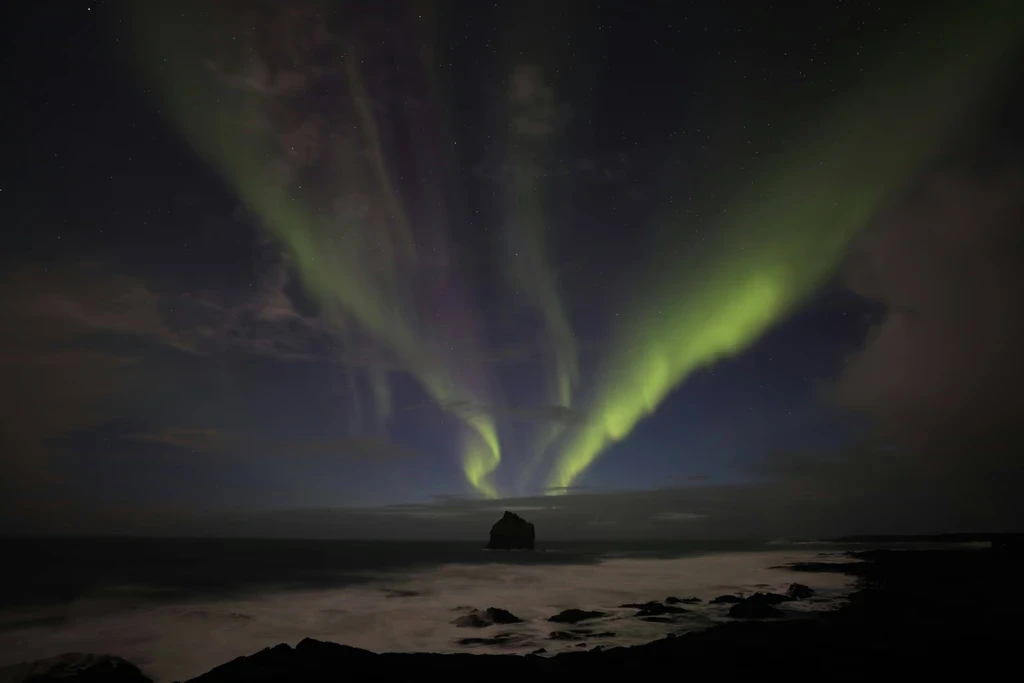
The truth is that there’s no wrong time to get married in the Land of Fire and Ice. The ideal season depends entirely on your priorities. Some dream of whispering their vows under the dancing Northern Lights, while others prefer the luminous glow of the midnight sun. Keep reading for a breakdown of the seasons, so you can find the perfect time to get married in Iceland.
Why Iceland Is a Unique Wedding Destination
Out of all the places in the world, why choose the Iceland wedding season?
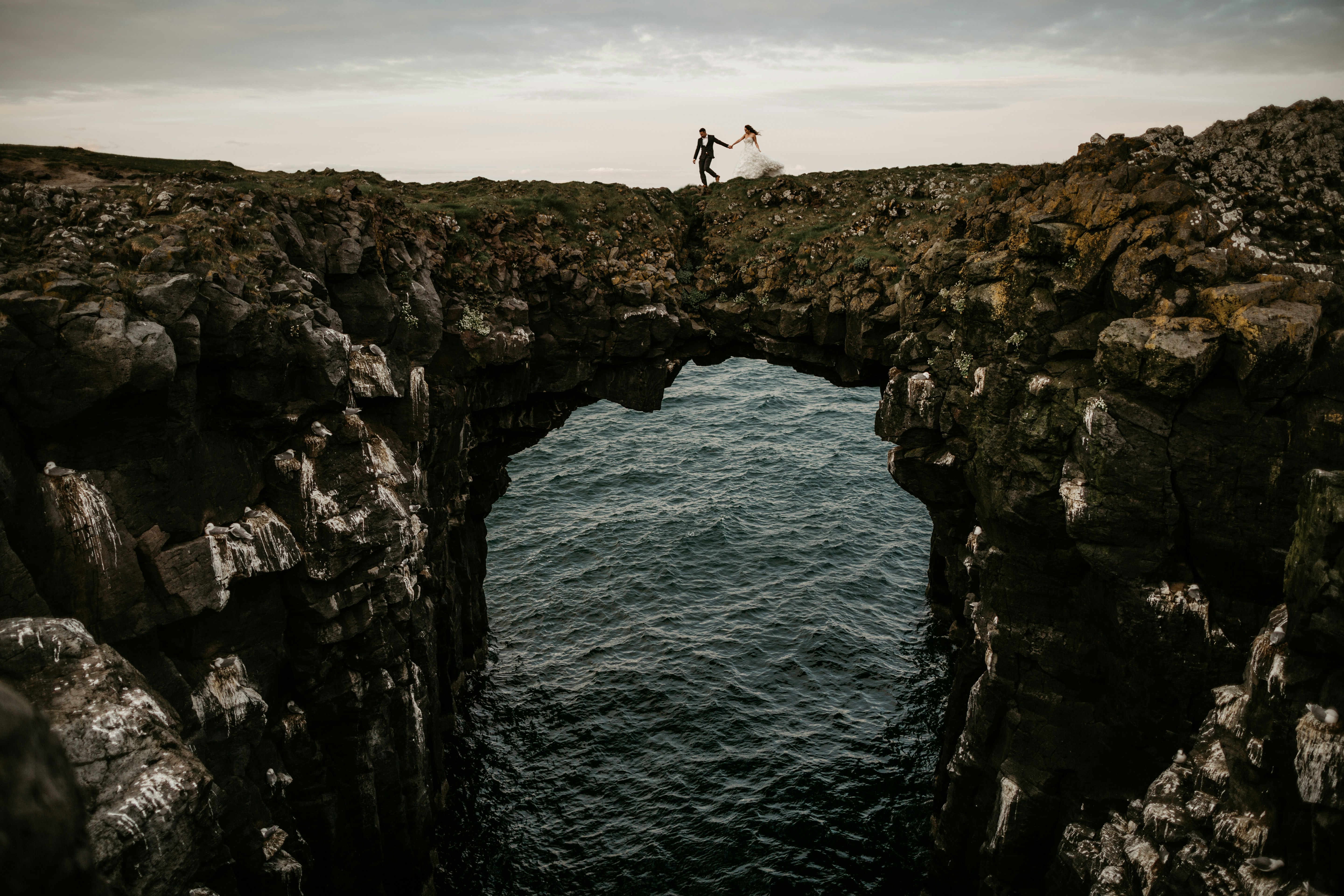
For one, the epic landscapes are unparalleled. Iceland offers a cinematic range of backdrops: thundering waterfalls, black sand beaches, glacier-capped mountains, and towering seaside cliffs. Couples will have their pick of sceneries as their wedding backdrop. Even sticking to Reykjavík or the surrounding South Iceland guarantees the most beautiful wedding photos ever.
Getting married in Iceland is also fairly easy, even as a foreigner. The legal process is simple and straightforward, provided required documents are submitted correctly and ahead of time.
And finally, you’ll get to start the honeymoon early. After the ceremony, you’ll only have to hop in the car. Iconic Icelandic attractions are often just a quick drive away, turning your wedding day straight into a honeymoon adventure.
Whether you’re planning to elope in Iceland or host a big celebration, it truly is the ultimate wedding destination.
Understanding the Iceland Wedding Season
The beauty of choosing the Land of Fire and Ice is that there is truly no single "best" time of the year for a ceremony. Instead, the ideal season depends entirely on the vision you have for your love story. The following sections will detail the distinct weather, light, and atmosphere of each season. Hopefully, this helps you pinpoint the perfect time for your destination wedding in Iceland.
Getting Married in Iceland in Summer (June–August)
The summer months mark the peak of the Iceland wedding season. This is the easiest time to plan logistics for your special day, as most roads and routes are open. Weather is at its mildest, and long, bright days make scheduling incredibly flexible.
Summer’s defining feature in Iceland? The legendary Midnight Sun. From late May through early August, the sun barely dips below the horizon, creating nearly 24 hours of daylight. For couples planning a wedding ceremony and photo opportunities, this means soft, golden light that can last for hours. You won’t get the Northern Lights in summer, but the ethereal glow of endless daylight is magical in its own right.
Puffins also swarm their nesting cliffs during summer, so it’s possible to capture the cutest photobombers in your Iceland wedding pictures!
Weather: Temperatures are the warmest of the year, averaging 10°C to 15°C (50°F to 59°F). Rain is common but often light, and wind speeds are generally lower than in colder seasons. Icelandic weather can still shift quickly even in summer, though.
Daylight: Approximately 21 to 22 hours of usable light. The sun only sets briefly, so you get unparalleled flexibility for scheduling ceremonies and portraits late into the evening.
Best for: Couples prioritizing comfortable exploration, accessibility to the Highlands (F-roads), and maximizing their day with the endless light of the Midnight Sun.
Not Ideal: Summer is also Iceland’s busiest tourist season. Expect higher costs for vendors and accommodations, plus heavy crowds at popular locations.
Getting Married in Iceland in Fall (September–October)
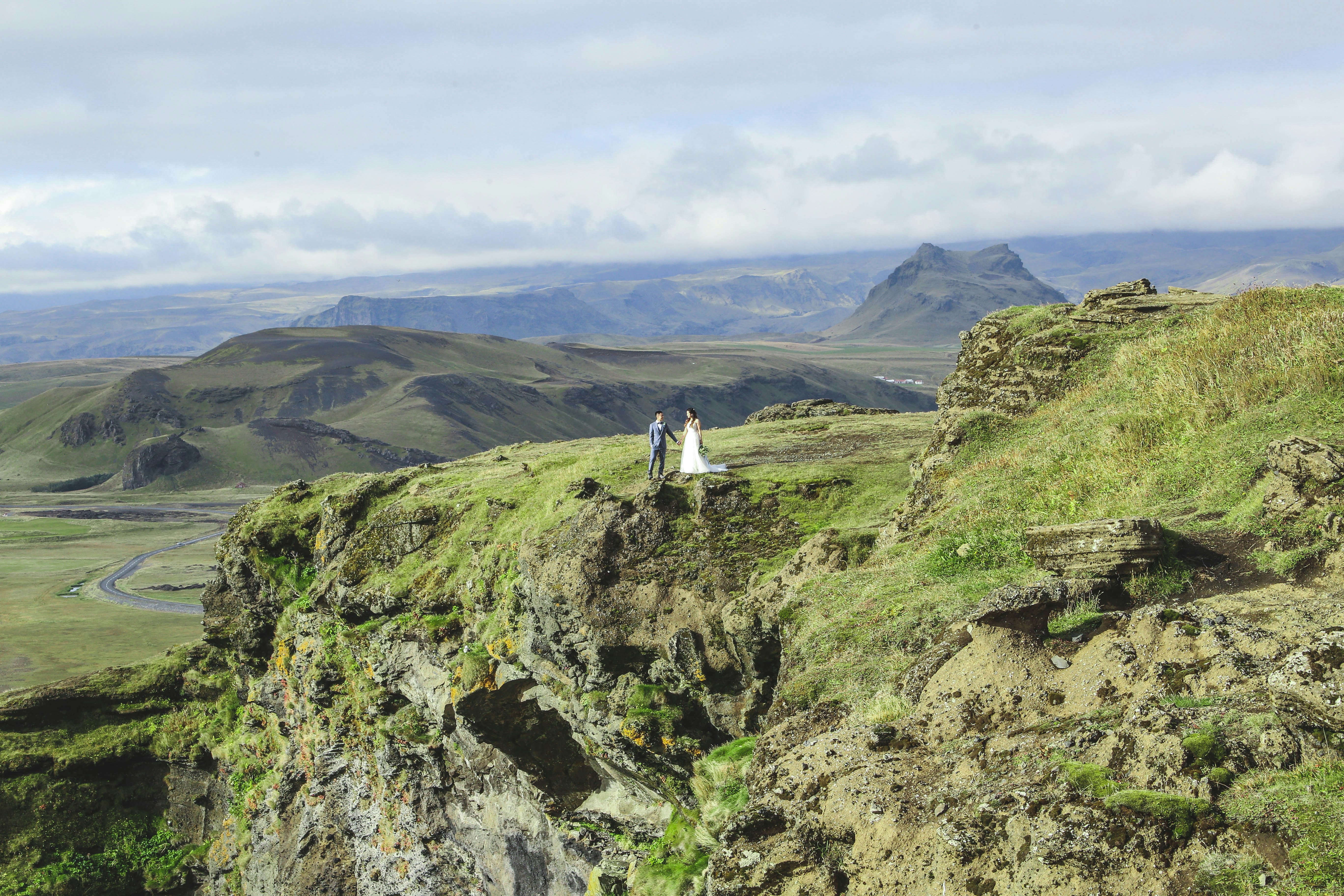
Fall is one of the most strategic and underrated times within the Iceland wedding season. These months offer a rare balance: Ring Road routes remain mostly accessible and there’s ample daylight for sightseeing. At the same time, evenings are getting dark enough to begin the Northern Lights hunt.
As summer fades, Iceland’s landscape shifts from lush greens to warm autumn tones of gold, red, and burnt orange. It’s a dreamy, romantic backdrop for wedding photography. Crowds also drop after August, giving couples a calmer atmosphere for saying their vows. It also means better availability and lower prices for vendors and accommodations.
Weather: Early fall temperatures hover around 5°C to 10°C (41°F to 50°F), though October can dip lower. Expect increasingly unpredictable weather, with strong winds and sudden rain becoming common.
Daylight: Daylight shrinks steadily, from roughly 14 to 15 hours on September 1 to about seven to eight hours by late October. The prime season for viewing the Northern Lights begins.
Best for: A superb balance of dramatic scenery, fewer crowds, rich autumn color, and the return of the Northern Lights.
Not Ideal: The Highlands become increasingly inaccessible. Many F-roads (mountain roads leading to the interior) close by mid-September, making some remote wedding locations off-limits by fall.
Getting Married in Iceland in Winter (November–March)
A winter wedding in Iceland is made for adventurous couples. The risks are there, yes. But the rewards are extraordinary: snow-covered landscapes and a high probability of witnessing the Northern Lights. During this season, your wedding is set in a breathtaking, frozen world straight out of a fairytale.
Winter unlocks unique opportunities, such as getting married inside an ice cave. Iceland’s famous crystal blue ice caves, naturally formed within glaciers, are only stable and accessible from November to mid-March.
Because daylight is limited, winter weddings require careful timing. In December, you may have only four to five hours of true daylight. So, ceremonies and portraits must be planned between the late-morning sunrise and early-afternoon sunset. The sun never climbs high, creating soft, golden-toned light that photographers adore.
Weather: Temperatures sit around 0°C to 4°C (32°F to 39°F). The major concern is wind chill and unpredictable winter storms, which can cause sudden road closures.
Daylight: Daylight is at its most limited, dropping to as little as four to five hours around the December solstice. As you approach March, days lengthen rapidly.
Best for: Adventurous couples seeking the Northern Lights, the intimate atmosphere of low crowds, and the singular experience of a ceremony near or inside ice caves.
Not Ideal: Very limited daylight for tours and photos, potentially hazardous travel conditions, and widespread winter road closures. Many F-roads remain shut all season.
Getting Married in Iceland in Spring (April–May)
Spring in Iceland is a time of quiet renewal, arguably the best-kept secret of the Iceland wedding season. This shoulder period lets you get married in Iceland without the crowds or high prices of summer.
If you’re planning your nuptials in spring, you’ll benefit from rapidly increasing daylight, ideal for photography sessions and exploration. As the winter snow melts, the waterfalls surge with meltwater, creating roaring backdrops for your vows. May also marks the return of the adorable puffins to their nesting cliffs.
Weather: Prepare for unpredictable weather. Average temperatures sit between 0°C to 8°C (32°F to 46°F), but with a mix of sun, rain, and even lingering snow.
Daylight: Daylight increases faster in spring than in any other period of the Iceland wedding season. It goes from around 13 hours in early April to over 18 hours by the end of May.
Best for: Budget-conscious couples who want long days and low crowds.
Not Ideal: Landscapes can look “muddy” or bare as the ground thaws, and most F-roads remain closed until June.
Weather Conditions to Expect for Your Wedding Day
You may have heard the Icelandic saying: “If you don’t like the weather, wait five minutes.” This is not an exaggeration. The forecast can shift hourly, so the key to your special day is preparedness. That goes for everyone, no matter what time of the Iceland wedding season you’re choosing.
Wind is the most disruptive element, demanding flexible scheduling and a wardrobe built on warm, windproof layers. Always have an indoor backup plan.
Daylight, Golden Hour, and the Midnight Sun
Light is the most important variable of the Iceland wedding season. (At least after getting your partner to say “yes.”) Due to the country’s high latitude, light quality shifts dramatically throughout the year. Each one promises unique opportunities that directs when to schedule your ceremony.
Most couples choose to tie the knot during the golden hour, a period of soft, warm light that photographers love. In Iceland, this glow can last longer than in many other places thanks to the sun’s slow movement across the horizon.
In peak summer, Iceland enjoys up to 21–22 hours of daylight. Around the summer solstice, golden hour can often stretch around 10 p.m. toward midnight or longer depending on location. Plan the ceremony and portraits late in the day to capture the stunning, extended Midnight Sun. Alternatively, winter only has four to six hours of daylight. The sun stays low, making the entire short day a long golden hour. Make sure you schedule your wedding ceremony within this window.
In spring and fall, sunrise and sunset shift rapidly. Early in the season you might see roughly 12–14 hours of daylight. However, this expands quickly in spring and contracts quickly in fall.
Best Backdrops for a Wedding in Iceland
With extraordinary scenery of wild beaches and snow-capped peaks, romance can be found in spades in Iceland. Deciding on the perfect backdrop for a wedding in Iceland is the fun part of planning your season. Fortunately, you’ll have plenty of Iceland wedding photo locations to choose from.
Reynisfjara Black Sand Beach: The iconic site, near the Black Sand Hotel, featuring dramatic basalt columns and the Reynisdrangar sea stacks rising from the ocean. (Note: Safety is paramount here due to sneaker waves.)
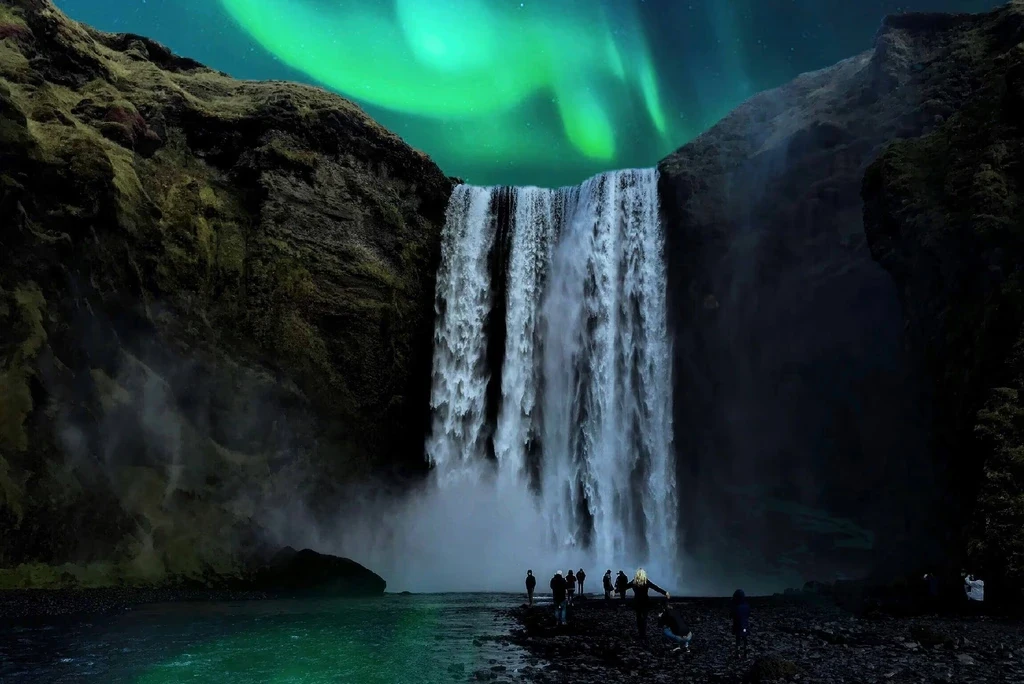
South Iceland waterfalls (Skógafoss and Seljalandsfoss): Mighty cascades that showcase Iceland’s incredible power and beauty. Seljalandsfoss is unique because you can walk behind the curtain of water for a truly intimate and misty portrait.
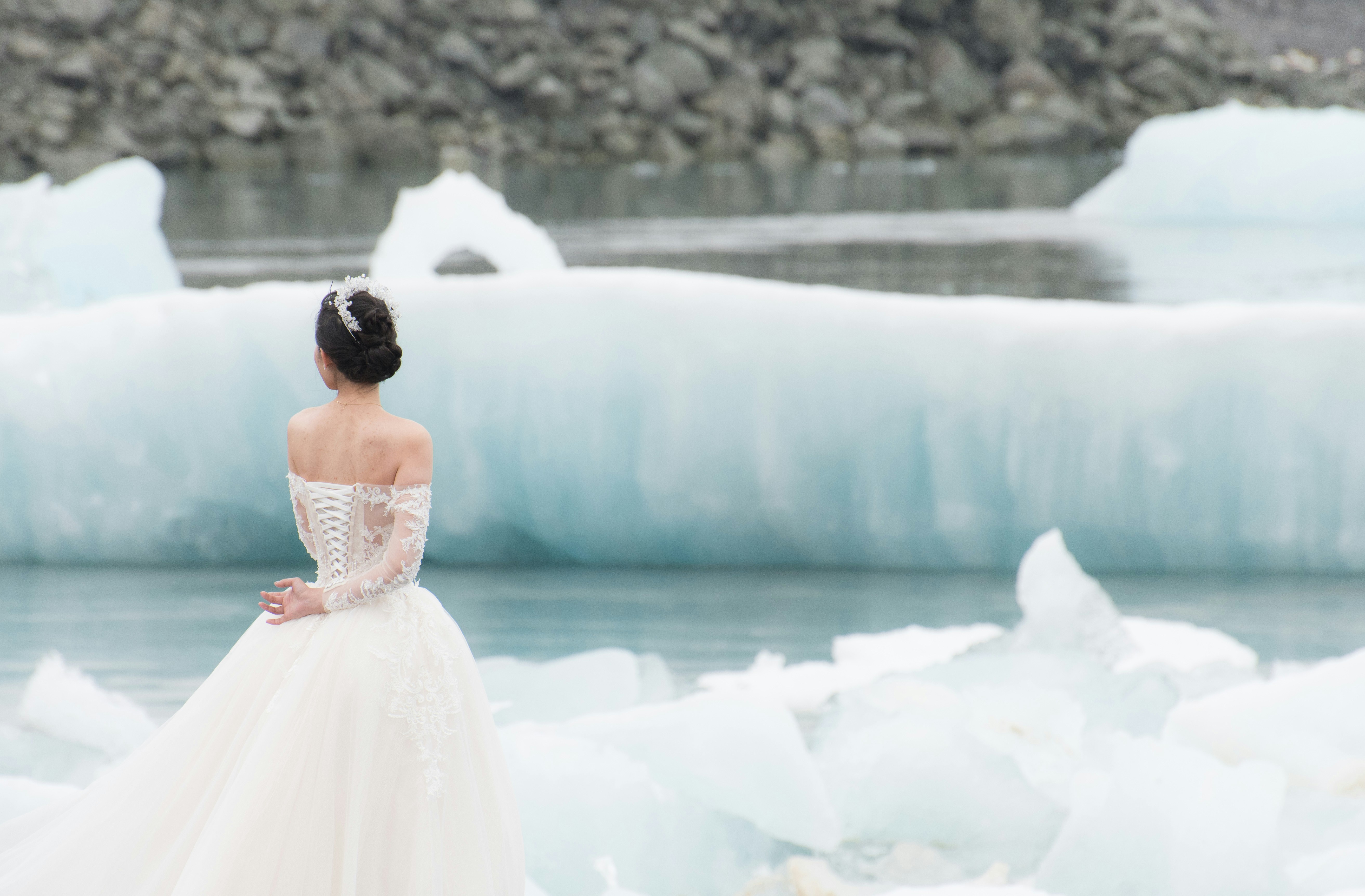
Jökulsárlón Glacier Lagoon and Diamond Beach: Floating blue icebergs drifting into the sea and washing up like diamonds on the black sand offer an otherworldly setting for a wedding.
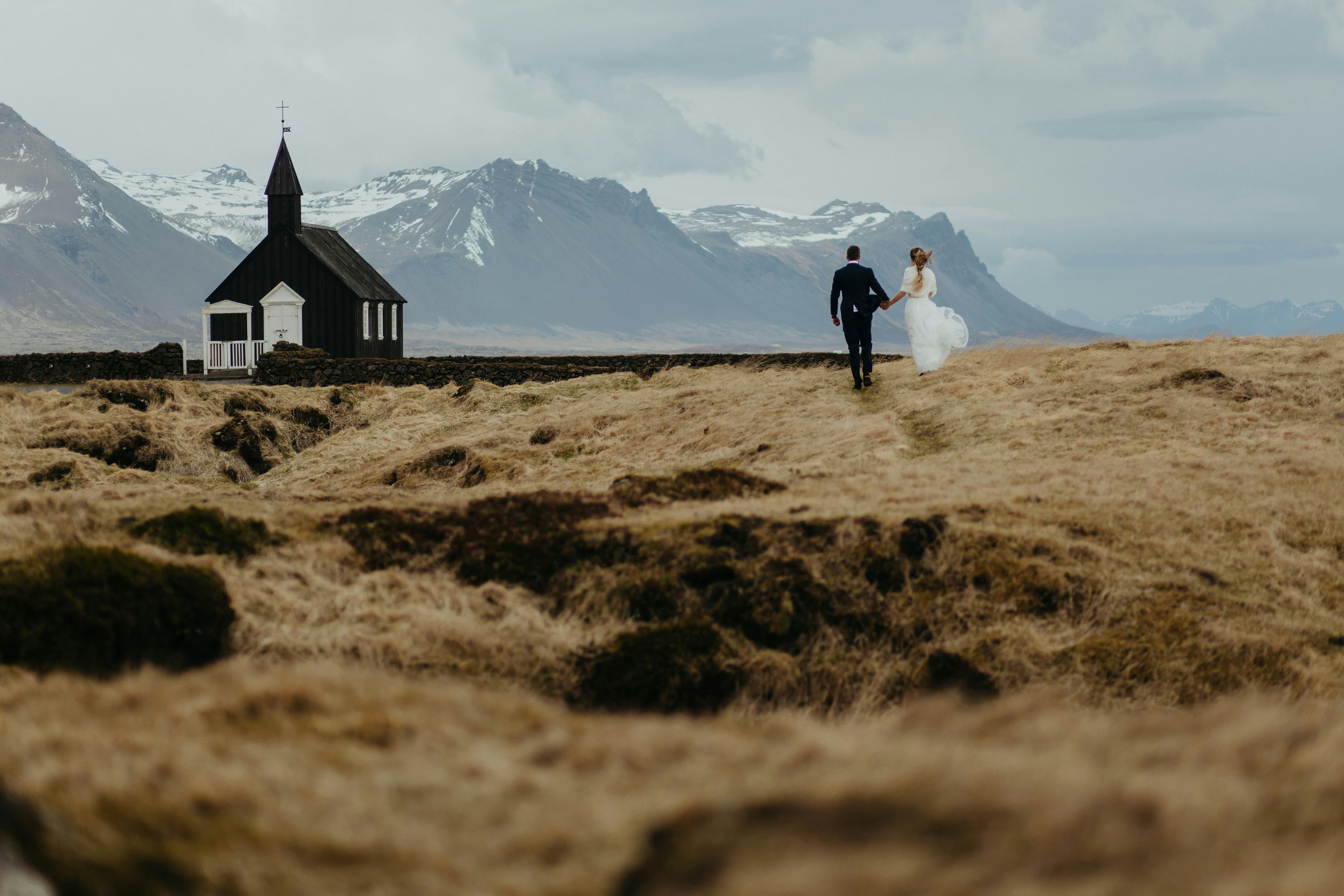
The Black Church of Búðir (Snaefellsnes Peninsula): A tiny, dramatic black wooden church set alone against a vast lava field and mountain views, it’s a moody, cinematic wedding spot.
Ice Caves (Winter Only): These tunnels of crystalline blue ice create a serene, ethereal, and completely unique ceremony location during winter.

Practical Tips for Planning Your Iceland Wedding or Elopement
Secure permits early. Many popular outdoor locations, including the Black Sand Beach and certain national park areas, require a small permit fee and registration for wedding photography. Always check the official site of the municipality or nature reserve well in advance.
Book vendors far ahead. During peak Iceland wedding season in summer, high-quality photographers, planners, and officiants are often booked 12–18 months in advance. Secure your top choices immediately after setting your date.
Factor in travel time. Distances in Iceland are deceptive. Always overestimate the time needed to travel between your hotel, ceremony location, and reception. It’s especially crucial in winter when road conditions can be slow or require detours.
Keep an eye out on conditions. Unpredictable weather in Iceland can lead to sudden road closures. Before heading out, always check vedur.is and road.is for weather and road conditions.
Invest in thermals and layers. Even in summer, temperatures can drop and the wind can be fierce. Invest in nude-colored thermal leggings/tops to wear discreetly under your dress or suit. You can check out our packing list for an Iceland wedding for other essentials.
Opt for sturdy footwear. Do not rely on delicate dress shoes for outdoor photos. Bring warm, waterproof boots with good grip for navigating lava fields, black sand, and wet terrain.
Plan for wind. Icelandic wind is a constant challenge. Discuss wind-proof hairstyles (updos are best) and consider a short veil or a secured cape, as long, flowing fabrics can quickly become unruly or even damaged.
Be flexible. Have a solid Plan B (a nearby church, covered space, or venue) for unexpected weather closures or extreme wind. Flexibility is the single most important tool for a smooth Iceland wedding season.
Understand legal requirements. While Iceland is easy for foreigners to marry, you must submit required papers to the District Commissioner well before the ceremony date. This includes Iceland's Marriage Notification Form and required legal documents (birth certificate, Certificate of Marital Status, etc.).
How to Choose the Right Time of the Year for Your Wedding Ceremony
Choosing the best time within the Iceland wedding season comes down to balancing your priorities. If you dream of the Midnight Sun and easy travel, choose summer. If the Northern Lights and unique ice caves are your focus, opt for a winter wedding. Fall and spring offer a strategic middle ground, delivering lower prices, fewer crowds, and a beautiful setting for your vows.
FAQs: Iceland Wedding Season
When to get married in Iceland?
The best time to get married in Iceland depends on your vision. Choose summer (June–August) for the Midnight Sun and easy travel, or winter (November–March) for the Northern Lights and ice caves.
What is the cheapest time of year to get married?
The cheapest time is generally the low season, specifically late fall and deep winter (November, January, and February). This is due to lower vendor demand and reduced accommodation costs.
Can foreigners get married in Iceland?
Yes, foreigners can legally get married in Iceland. Make sure to submit the required documentation (like birth certificates and Certificates of Marital Status) to the District Commissioner well in advance.
How quickly can you get married in Iceland?
While the ceremony itself is brief, the legal application process requires documents to be submitted at least two to three weeks before your date. It is wise to start the paperwork several months in advance.
Do I need a wedding planner in Iceland?
While not strictly necessary for a simple elopement, a local wedding planner is highly recommended to navigate vendor bookings and secure permits. A planner is also useful to manage the unpredictable weather and logistical complexities of the Iceland wedding season.
blogs