" transform="translate(1.334 2)" width="13.333314731408331px"/><path d="M 0 2.667 L 0 0" fill="transparent" height="2.666640000000001px" id="nlKB6m7XS" stroke-dasharray="" stroke-linecap="round" stroke-linejoin="round" stroke-width="1" stroke="rgb(255, 255, 255)" transform="translate(8 8.667)" width="1px"/><path d="M 0.167 0.167 L 0.25 0.167 M 0.333 0.167 C 0.333 0.075 0.259 0 0.167 0 C 0.075 0 0 0.075 0 0.167 C 0 0.259 0.075 0.333 0.167 0.333 C 0.259 0.333 0.333 0.259 0.333 0.167 Z" fill="transparent" height="1px" id="G0jsljuaP" stroke-dasharray="" stroke-linecap="round" stroke-linejoin="round" stroke-width="1" stroke="rgb(255, 255, 255)" transform="translate(7.834 6)" width="1px"/></svg>)
" transform="translate(4 4)" width="8px"/></svg>)
How to dress before a Northern Lights excursion
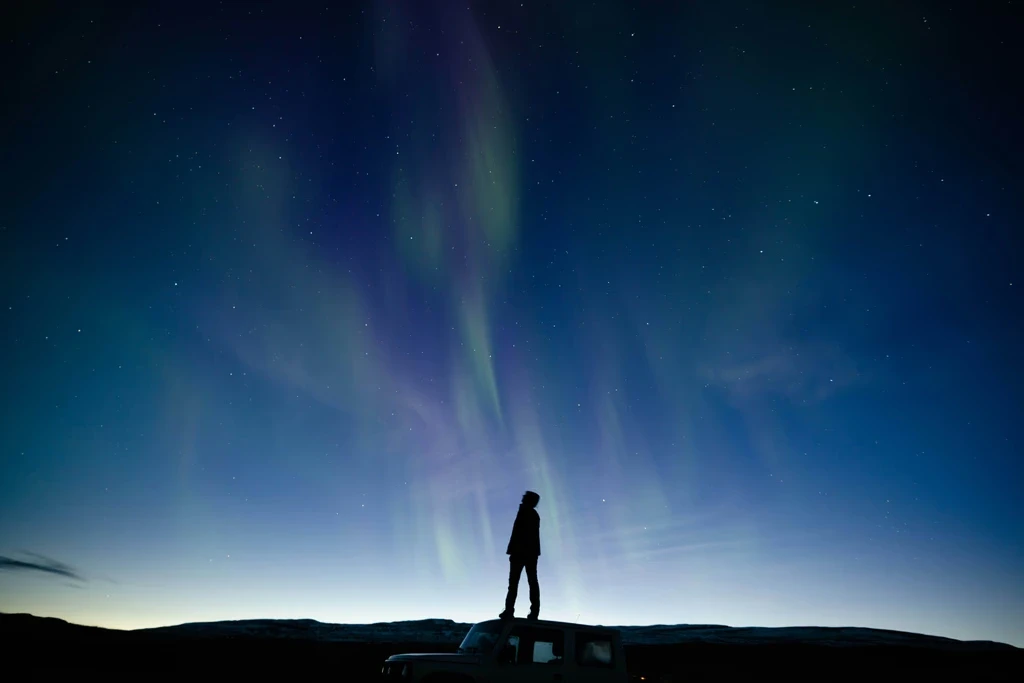
Iceland’s sparse population and accessible rural areas with their lack of light pollution make it ideal for a Northern Lights hunt. Choosing to stay at Black Sand Hotel is a smart choice in that respect. But no matter where you stay, often aurora season also coincides with the most challenging weather. Such cold and windy conditions don’t have to be a deal breaker, but you will need to prepare properly for your trip to ensure you stay comfortable throughout the evening. In this guide, we’ll take a look at what to consider as you set out and dissect how to dress before a Northern Lights excursion.
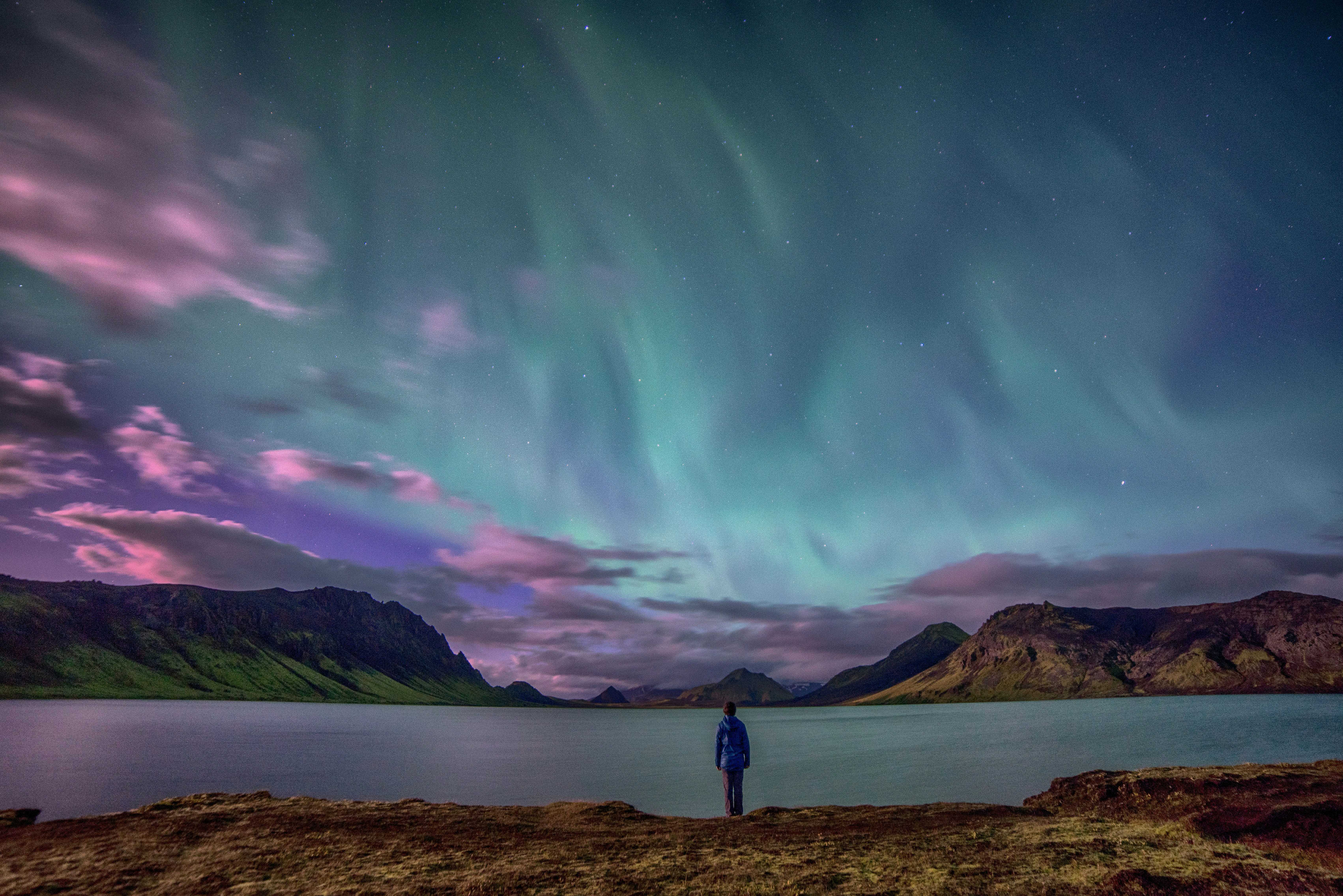
What you’ll need to contend with
Northern Lights season in Iceland typically stretches from late August to the middle of April. Many travellers team their aurora hunt with a winter trip as this also means that they can experience seasonal activities such as visits to ice caves. The closer you get to the middle of winter, the earlier it gets dark, which maximises the potential window for a viewing.
However, it’s often the case that you’ll need to wait a long time for the Northern Lights to make an appearance, sometimes several hours. At this time of year, temperatures can fall to around freezing and as you’re likely to have ventured out into the countryside then potentially you could be standing around with nowhere close by in which to take shelter.
Wind chill can make it feel colder than the thermometer suggests, so be sure to factor this in. You might also need to prepare for icy paths and think carefully about whether your footwear is up to the job. You should also consider how you’re going to carry and access any gear you’ve brought to photograph the Northern Lights.
Working out what to wear
One of the most important aspects of dressing for the Northern Lights is to think about how you will trap heat but avoid sweat, as the latter has a cooling effect on the skin that you’ll definitely want to avoid. Layering up is important, but the layers that you choose need to be the right ones.
Though there are plenty of specialist shops in Reykjavik that you could visit to get yourself kitted out, this may not be convenient, particularly if you’re keen to get to the south coast as soon as possible. Clothing also tends to be expensive in Iceland, and you may find it’s cheaper to buy what you need at home and bring it with you.
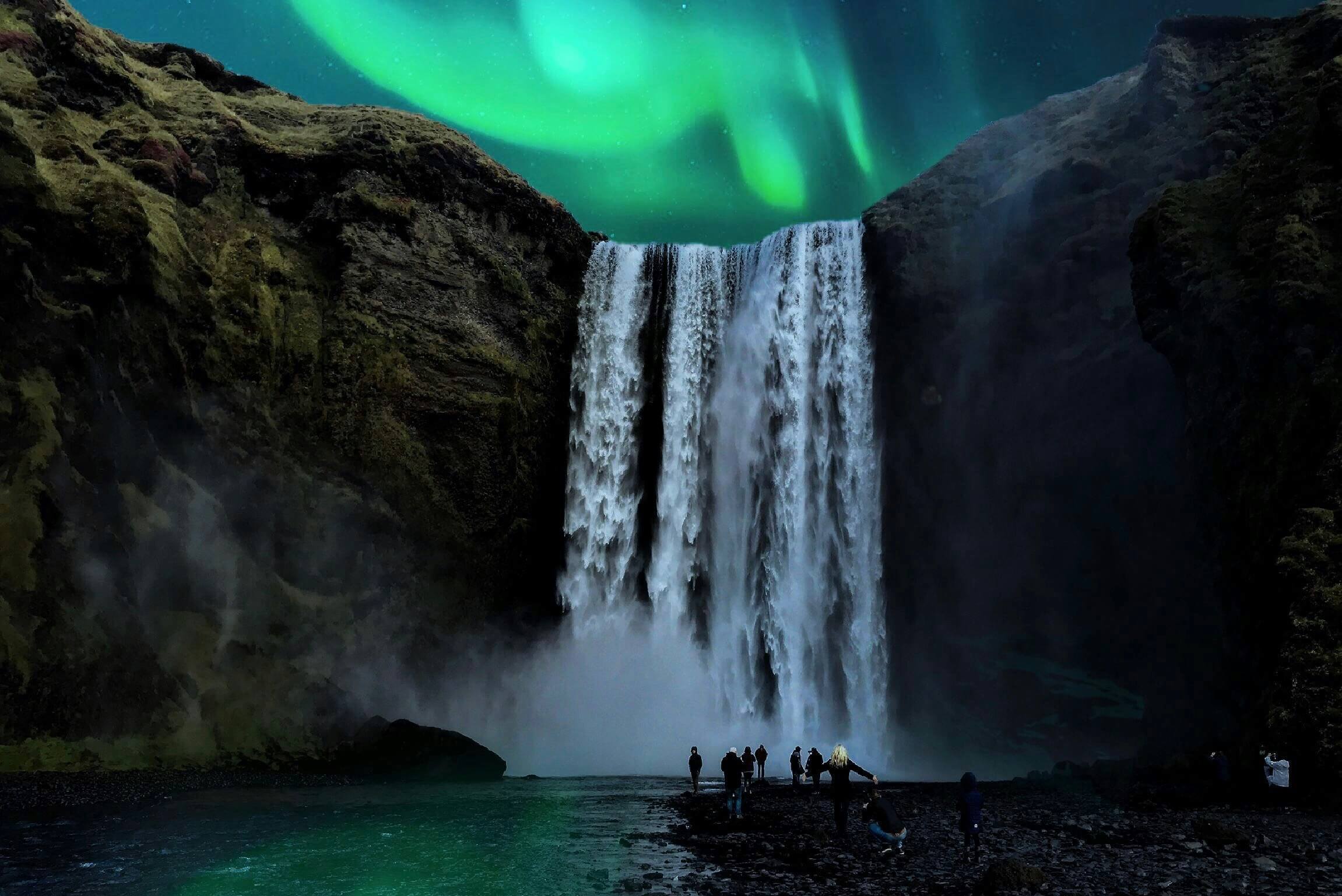
The clothing you’ll need
Inner layers
Begin with what’s underneath and make it thermal. Most travellers choose base layers made from merino wool or synthetic fabrics that are designed to be efficient. You’ll need a pair of long johns that fit snugly – if you’re tall, check the length too – and also a long sleeved top.
Layer up with clothing that helps trap that all-important heat. It’s wise not to choose items that are too bulky as these can impair movement. Fleeces are a good choice as they are lightweight but designed to keep you warm. However if you’re a traditionalist you might want to switch one out for a lopapeysa, the Icelandic wool sweater that you’ll see everywhere.
Outer layers
Outer layers need to be windproof but also waterproof. You’ll have taken a look at the weather forecast before setting out on your Northern Lights hunt, of course, and will have set out with the expectation of clear skies. However Icelandic weather is notoriously fickle and conditions can change fast, meaning you can’t rule out a rain shower during the course of the evening.
Make sure that the items you choose for your outer layer are good quality garments that deliver the performance that they promise. Waterproof trousers are as important as a waterproof jacket. Remember if it’s windy there’ll be little point in attempting to hold up an umbrella so make sure the coat you put on has a hood that can be drawn close to your face.
Extremities
It’s crucial to protect your extremities – your face, hands and feet. In cold weather, heat is lost through the top of your head so make sure you have a close-fitting beanie or bobble hat to take care of that. Wear a scarf or snood to keep your neck nice and warm; if it’s the former, make sure it’s securely wrapped.
Gloves need to function in two ways: firstly they need to keep your hands warm, but they also need to be easy to remove if you need to, such as if you are setting the dials on your camera. You might find it helps to wear a thinner pair of gloves that can be kept on or perhaps look for a pair that are fitted with special conductive fingertips that enable you to work a touch screen.
Footwear
Your feet shouldn’t be an afterthought. If you are standing around on an untreated surface for potentially several hours, the cold is going to travel through the soles of your footwear, so make sure they have a thick tread. Thick wool socks are another must; make sure they don’t restrict movement by being too tight.
If you’re out when it is icy, then you’ll be grateful for a pair of crampons. These fit over the sole of your shoes or boots and give you extra grip on slippery surfaces. They can be bought cheaply online but if you’re caught out, buy them when you arrive. Supermarkets stock basic ones during the winter season; they’ll suffice if you’ve nothing better.
Pockets and bags
Another thing to consider is the bag you carry as well as the number and position of pockets, especially if you intend to photograph the Northern Lights during your excursion – and who wouldn’t want to record the moment for posterity? It’s a good idea to think about how you’ll carry any gear to and from your chosen spot but also how you’ll get at it throughout the night.
Spare memory cards, extra batteries, power banks and cables need to be accessible but also protected from the cold. You’ll be grateful for a small torch which can be a godsend when it comes to checking the settings on your camera and finding your way along uneven paths in the dark.
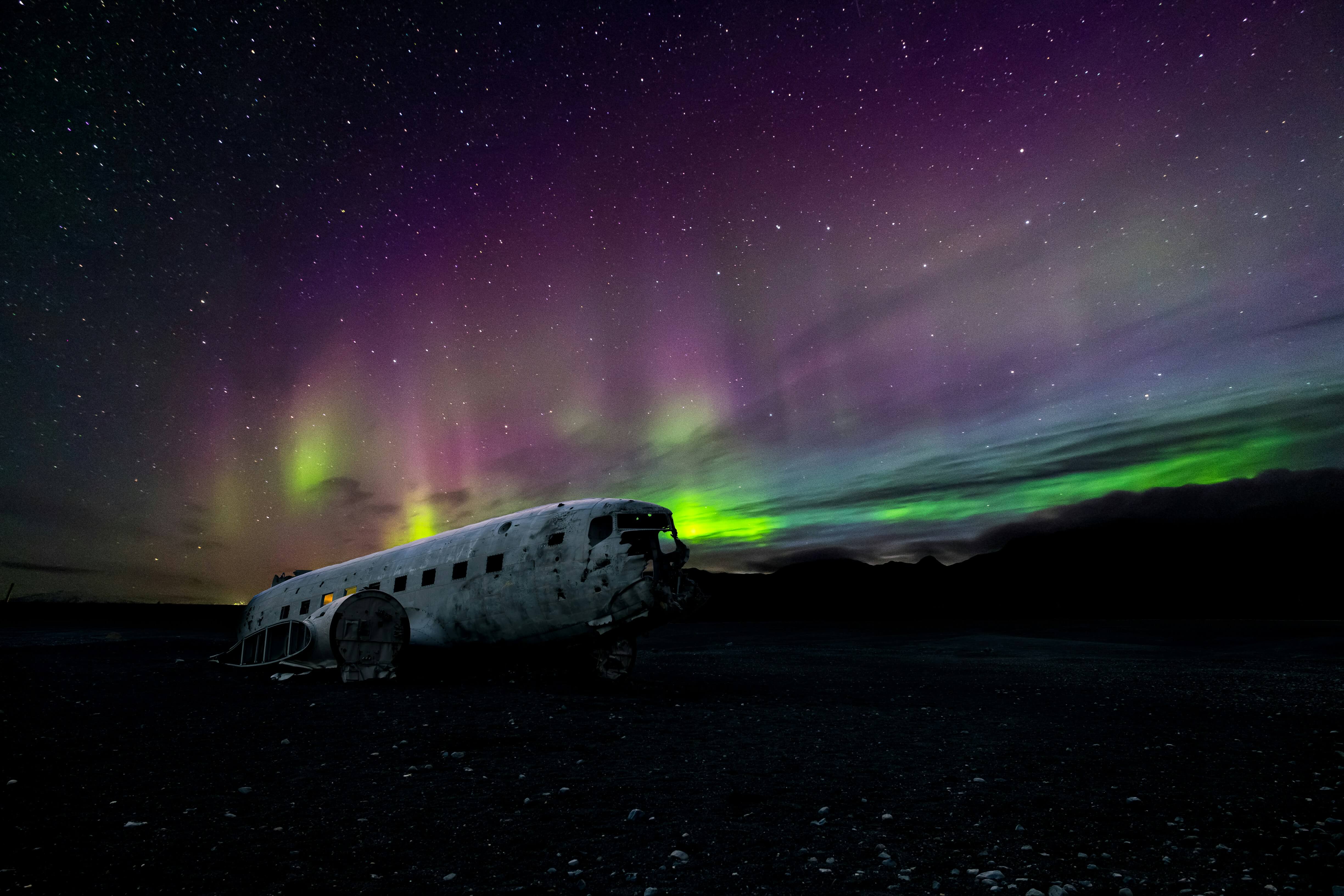
Internal pockets are great for keeping items warm but make sure it’s not too tricky to peel off your outer layers in order to reach them. Too many fiddly fastenings and stiff or concealed zips will be frustrating – it’s a balance. You might also consider using a thermal sleeve or even a spare hand warmer if you prefer to stick with an outside pocket.
Something else to consider is viewing the Northern Lights from (or at least close to) your accommodation. This will make it possible to pop inside to warm up or to retrieve anything you need. Choosing a hotel in a rural location such as Black Sand Hotel means that you are perfectly situated to experience the aurora borealis in comfort without having to travel too far.
Even so, being appropriately dressed for the outdoors is a must, so we’d recommend you follow our advice on what to wear to ensure your Northern Lights encounter is as pleasant as possible.
blogs
