" transform="translate(1.334 2)" width="13.333314731408331px"/><path d="M 0 2.667 L 0 0" fill="transparent" height="2.666640000000001px" id="nlKB6m7XS" stroke-dasharray="" stroke-linecap="round" stroke-linejoin="round" stroke-width="1" stroke="rgb(255, 255, 255)" transform="translate(8 8.667)" width="1px"/><path d="M 0.167 0.167 L 0.25 0.167 M 0.333 0.167 C 0.333 0.075 0.259 0 0.167 0 C 0.075 0 0 0.075 0 0.167 C 0 0.259 0.075 0.333 0.167 0.333 C 0.259 0.333 0.333 0.259 0.333 0.167 Z" fill="transparent" height="1px" id="G0jsljuaP" stroke-dasharray="" stroke-linecap="round" stroke-linejoin="round" stroke-width="1" stroke="rgb(255, 255, 255)" transform="translate(7.834 6)" width="1px"/></svg>)
" transform="translate(4 4)" width="8px"/></svg>)
Iceland South Coast vs Golden Circle: Which Route Should You Choose?

Travelers planning a trip to Iceland often face the same dilemma: Should I explore Iceland’s Golden Circle or South Coast? Both routes are iconic. Both are easy to access from Reykjavík or Keflavik International Airport. And both showcase the raw beauty that defines this island.
But once you start mapping your South Iceland itinerary, the differences become clear.
Choosing between the Golden Circle and the South Coast isn’t simply a matter of distance. It’s about pace, landscape, and atmosphere. One is compact and historic. The other stretches along the ocean, shaped by glaciers and black sand beaches.
If you’re deciding between two iconic Icelandic routes, here’s what you need to know.
Iceland’s Golden Circle vs South Coast: Quick Comparison at a Glance
Feature | The Golden Circle | The South Coast |
Total Driving Time | About 6–8 hours (from Ölfus/Selfoss) | About 10–12 hours (round trip up to Vík only) |
Landscape | Tectonic plates, geysers, and waterfalls | Waterfalls, glaciers, and black sand beaches |
Main Sights | Þingvellir National Park, Geysir Geothermal Area, Gullfoss Waterfall | Seljalandsfoss, Skógafoss, Reynisfjara Black Sand Beach, Jökulsárlón Glacier Lagoon |
Best For | First-time visitors; history and geology enthusiasts | Adventure seekers and photographers |
Atmosphere | Iconic and well-curated | Wild, raw, and expansive |
The Golden Circle: Iceland’s Must-See Classics
The Golden Circle is Iceland's most famous tourist route. It’s a 187-mile (300 km) loop that starts and ends near the capital. However, you can also start from the South Iceland countryside. Plus, it can be completed comfortably in a single day, making it ideal for travelers with limited time.
This route connects three major sites:
Þingvellir National Park
Geysir Geothermal Area
Gullfoss Waterfall
Þingvellir National Park
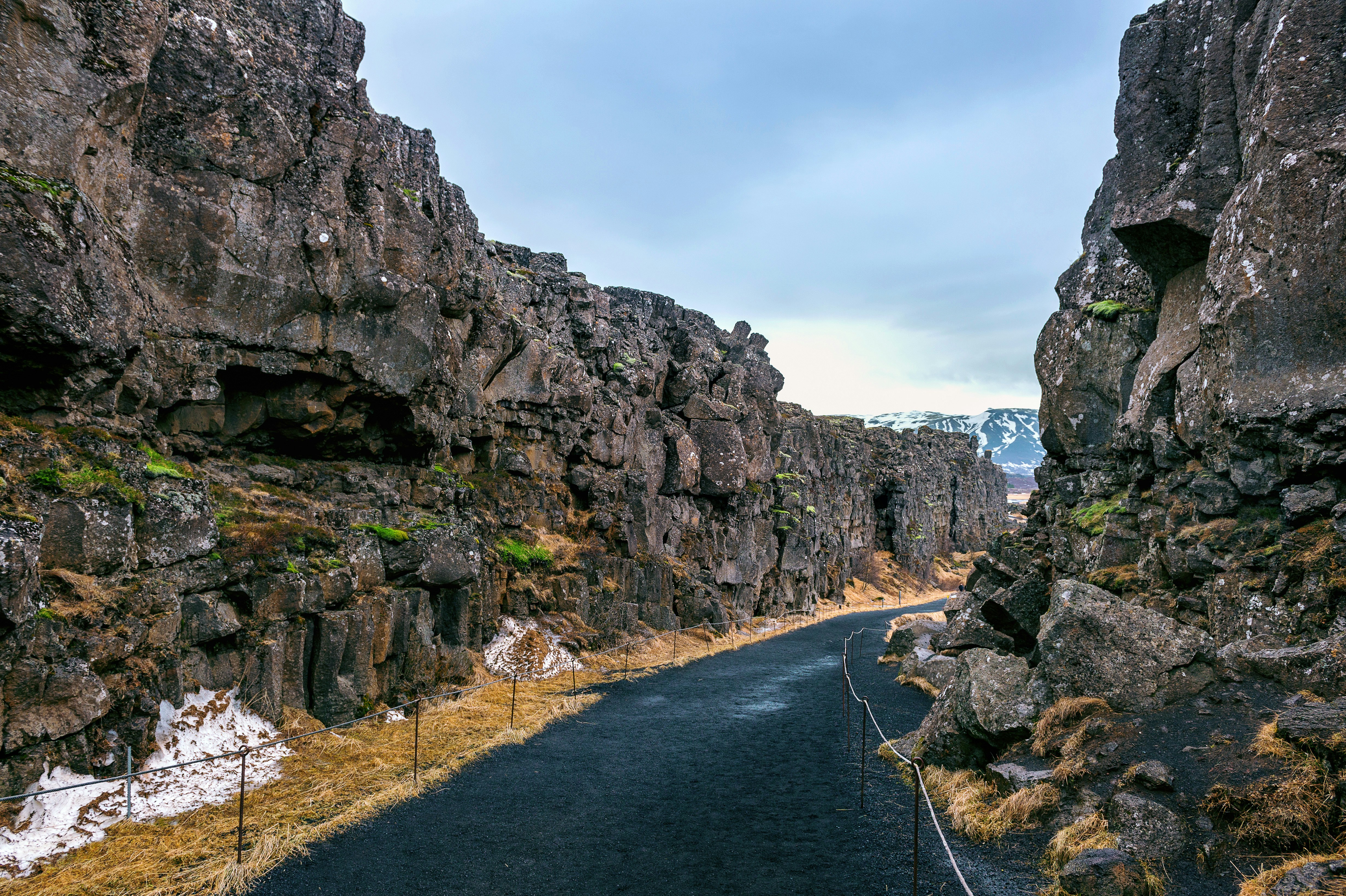
As a UNESCO World Heritage Site, Þingvellir National Park (Thingvellir National Park) is the crown jewel of the route. It’s one of the few places on Earth where you can walk between the North American and Eurasian tectonic plates. The rift valley is a physical manifestation of the Earth pulling itself apart. It’s also the site of the Alþingi, the world’s oldest surviving parliament, founded in 930 AD.
If you have extra time, snorkeling between tectonic plates with an expert guide is a popular and fun activity. Inside the national park, you can also find the Öxarárfoss Waterfall with large lava rocks below it.
Geysir Geothermal Area
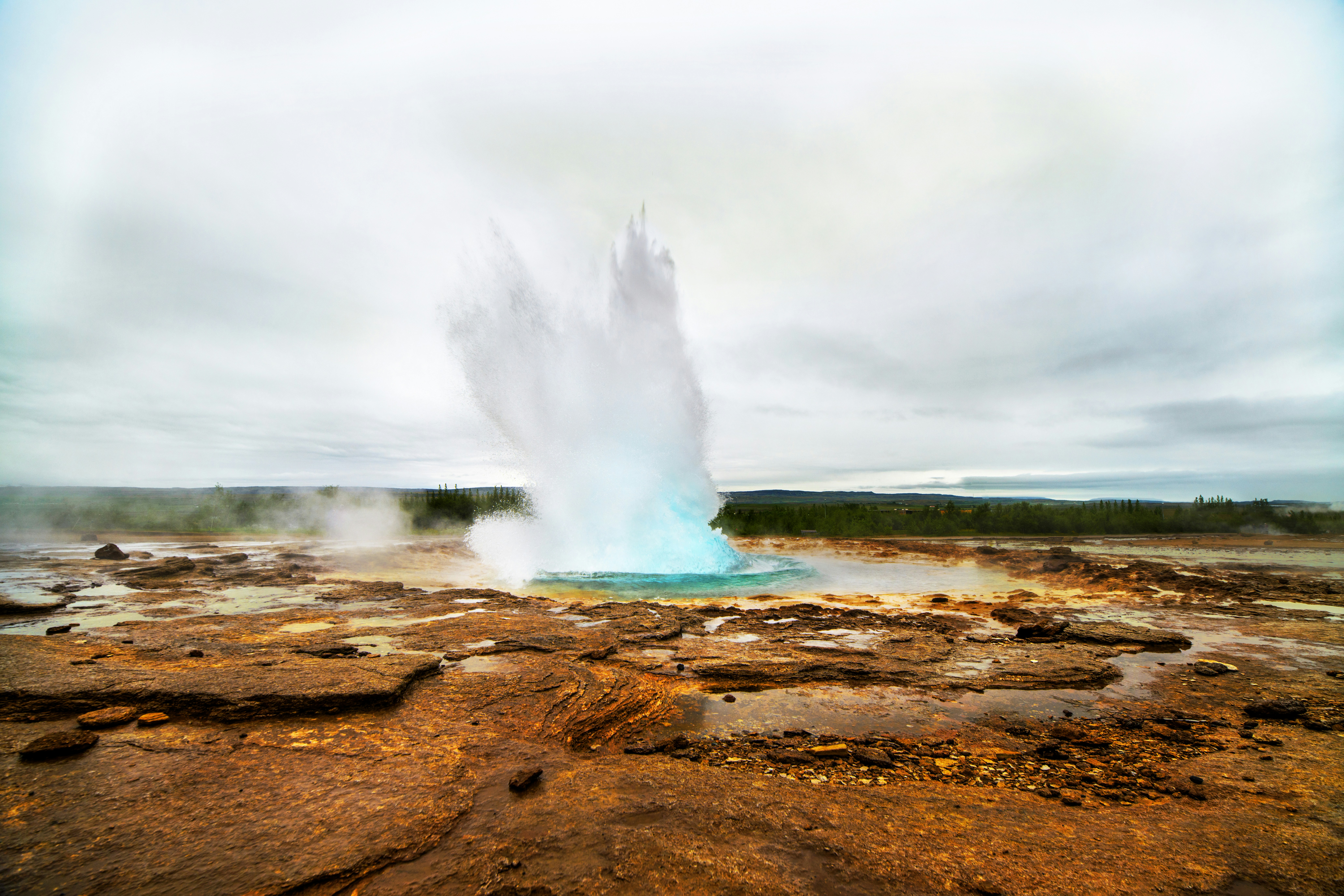
At the Geysir Geothermal Area, the earth steams and bubbles. The "Great Geysir" itself is mostly dormant. But the nearby Strokkur doesn’t disappoint. It erupts every 6–10 minutes, sending hot water up to 130 ft (40 m) high into the air.
Boardwalks make it easy to explore safely. On your walk, you’ll likely notice an eggy smell around you. And that’s sulfur from the earth’s ground.
Gullfoss Waterfall
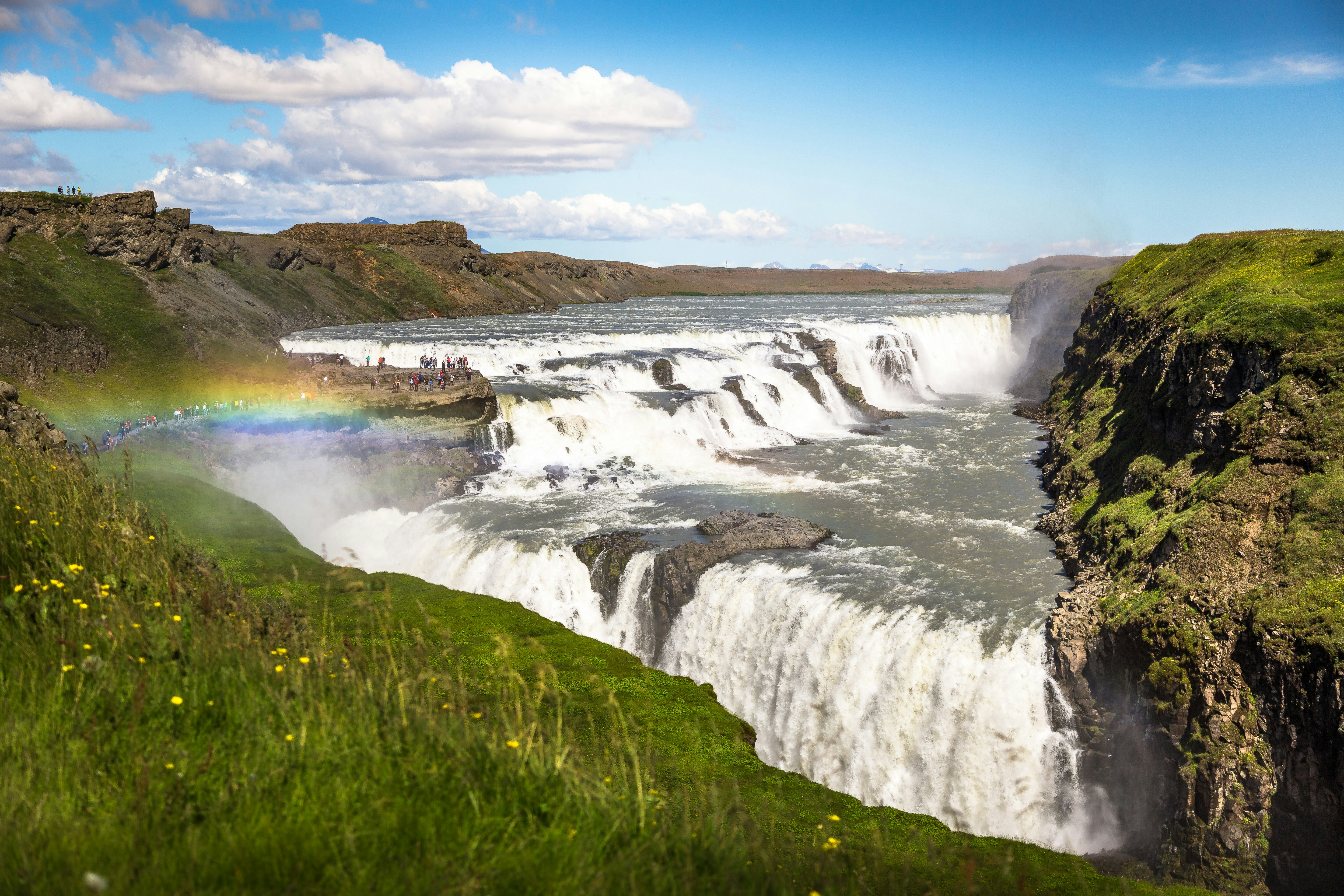
Gullfoss Waterfall, also known as the "Golden Falls," is a massive, two-tiered waterfall that thunders into a deep canyon. On sunny days, rainbows frequently arc through the mist. And in winter, you’ll see frozen icicles and snowy grounds around it.
This famous waterfall marks the furthest point of the Golden Circle before the road heads back toward the coast.
Pro tip: The Golden Circle has plenty of secret stops. If you’re driving yourself, take time to explore smaller waterfalls, hot springs, and a tomato farm.
The South Coast: Iceland at Full Volume
While the Golden Circle is a curated experience, the South Coast is an epic saga. This route follows the Ring Road (Route 1) eastward, sandwiched between towering mountains and the crashing ocean.
Along South Iceland, you’ll encounter:
Seljalandsfoss Waterfall
Skógafoss Waterfall
Reynisfjara Black Sand Beach
Sólheimajökull Glacier
Jökulsárlón Glacier Lagoon
Diamond Beach
Iceland’s famous waterfalls: Seljalandsfoss & Skógafoss
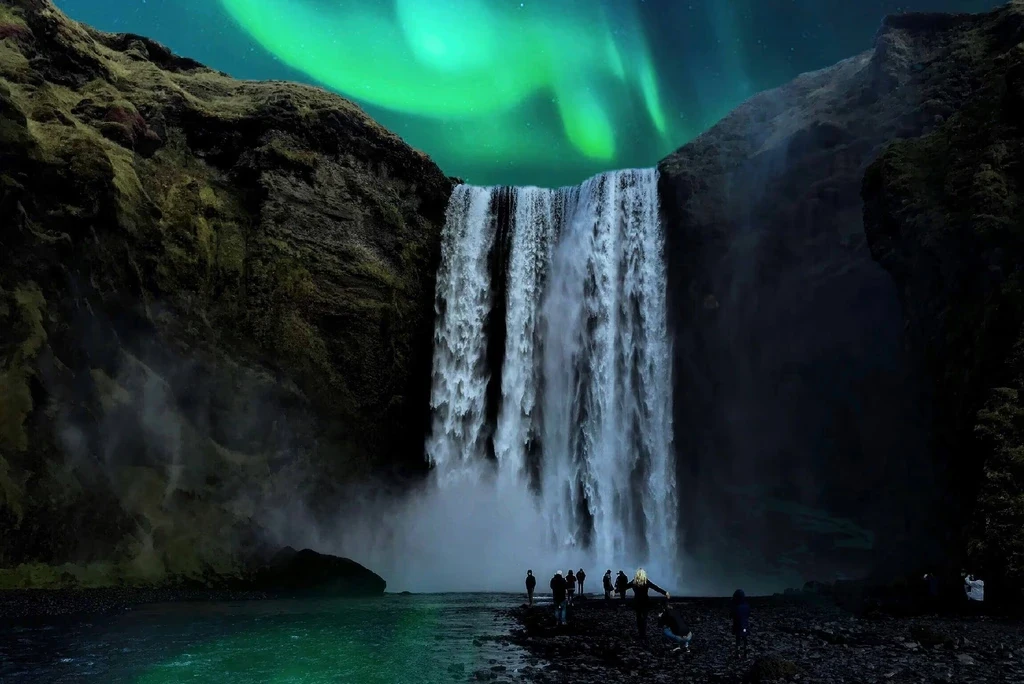
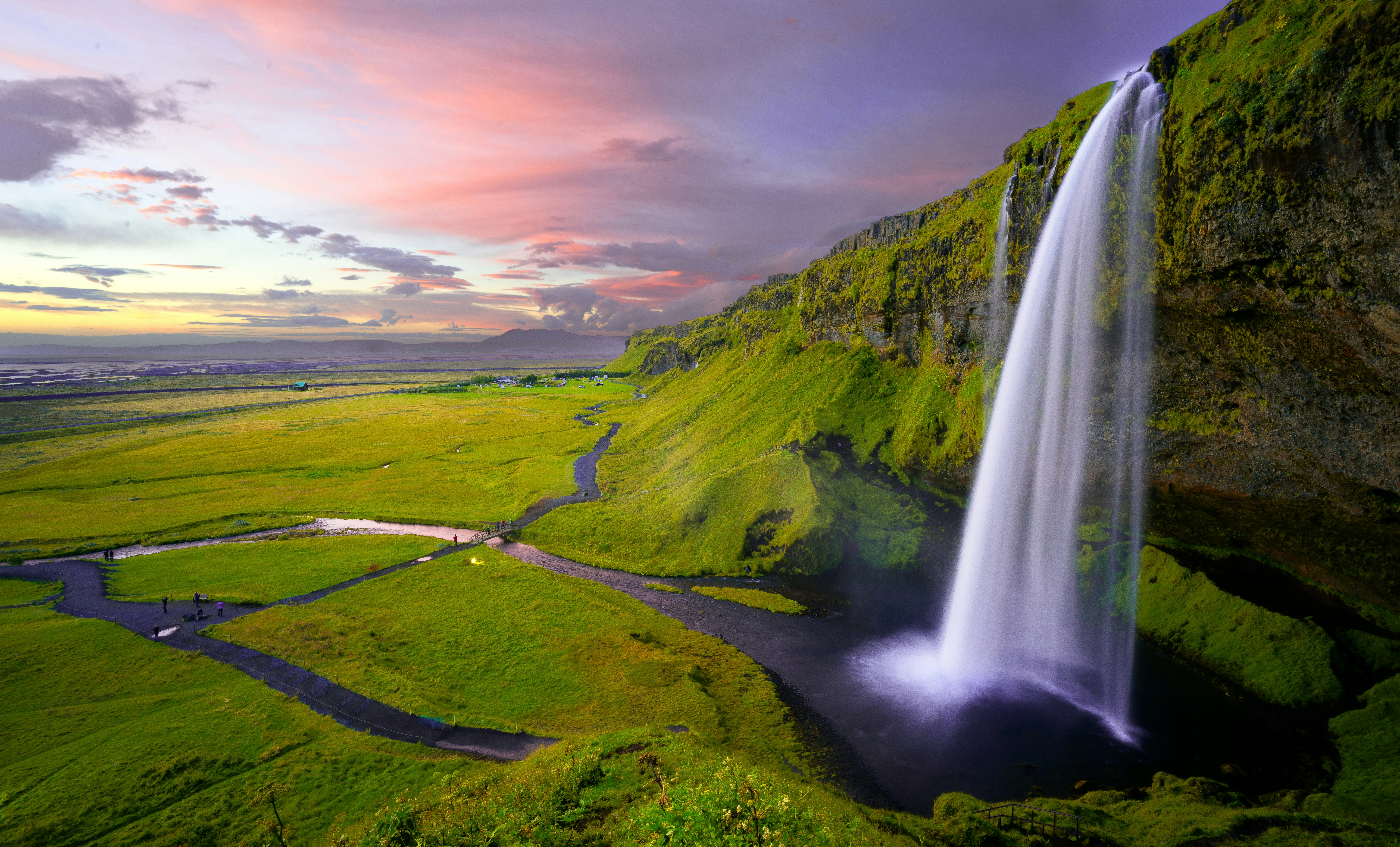
Two of South Iceland’s most famous waterfalls sit along here. Seljalandsfoss Waterfall is unique because you can actually walk behind the curtain of falling water. A short drive further east brings you to Skógafoss, a massive 197-ft (60-m) waterfall that often creates double rainbows.
Reynisfjara Black Sand Beach
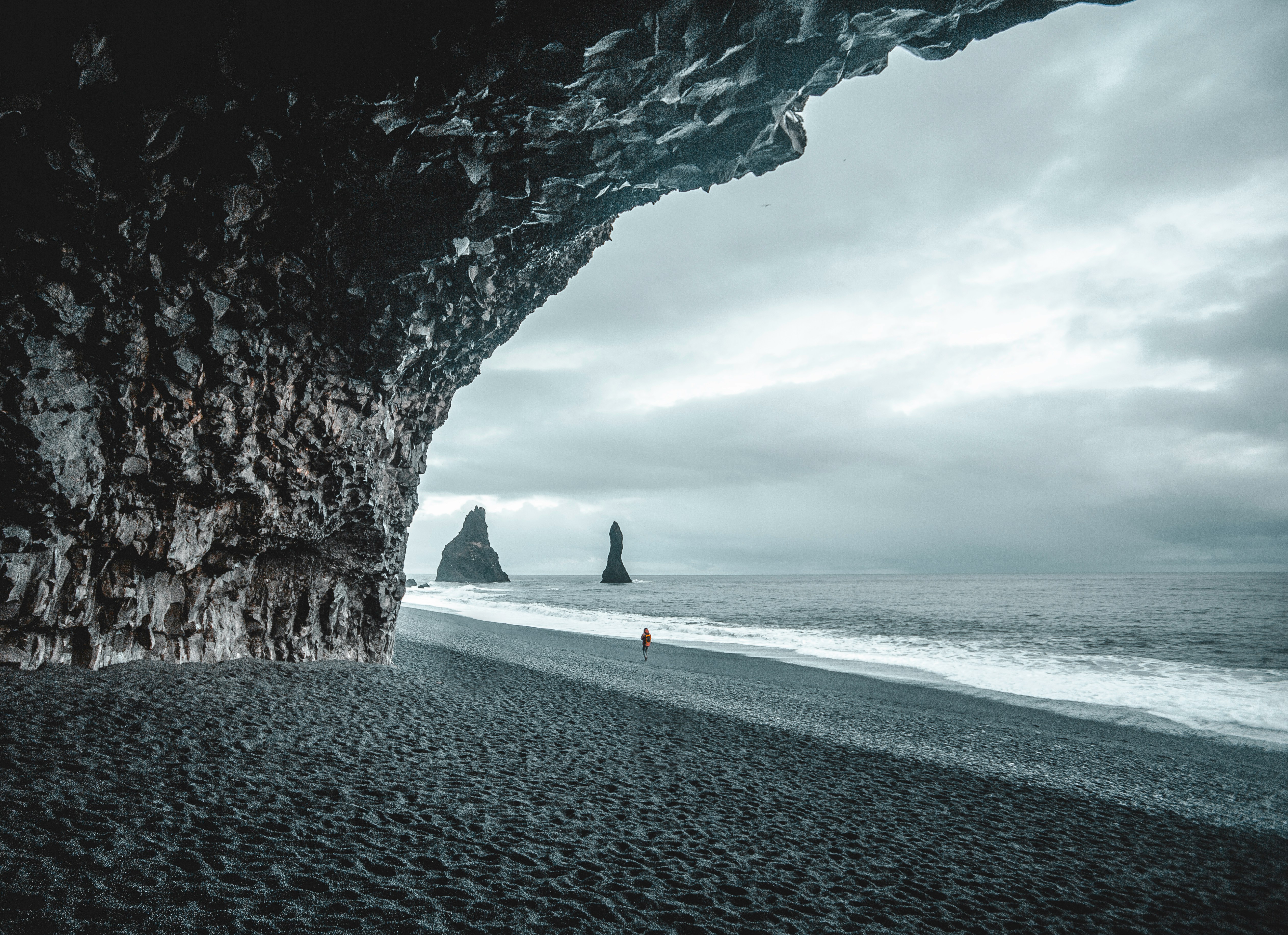
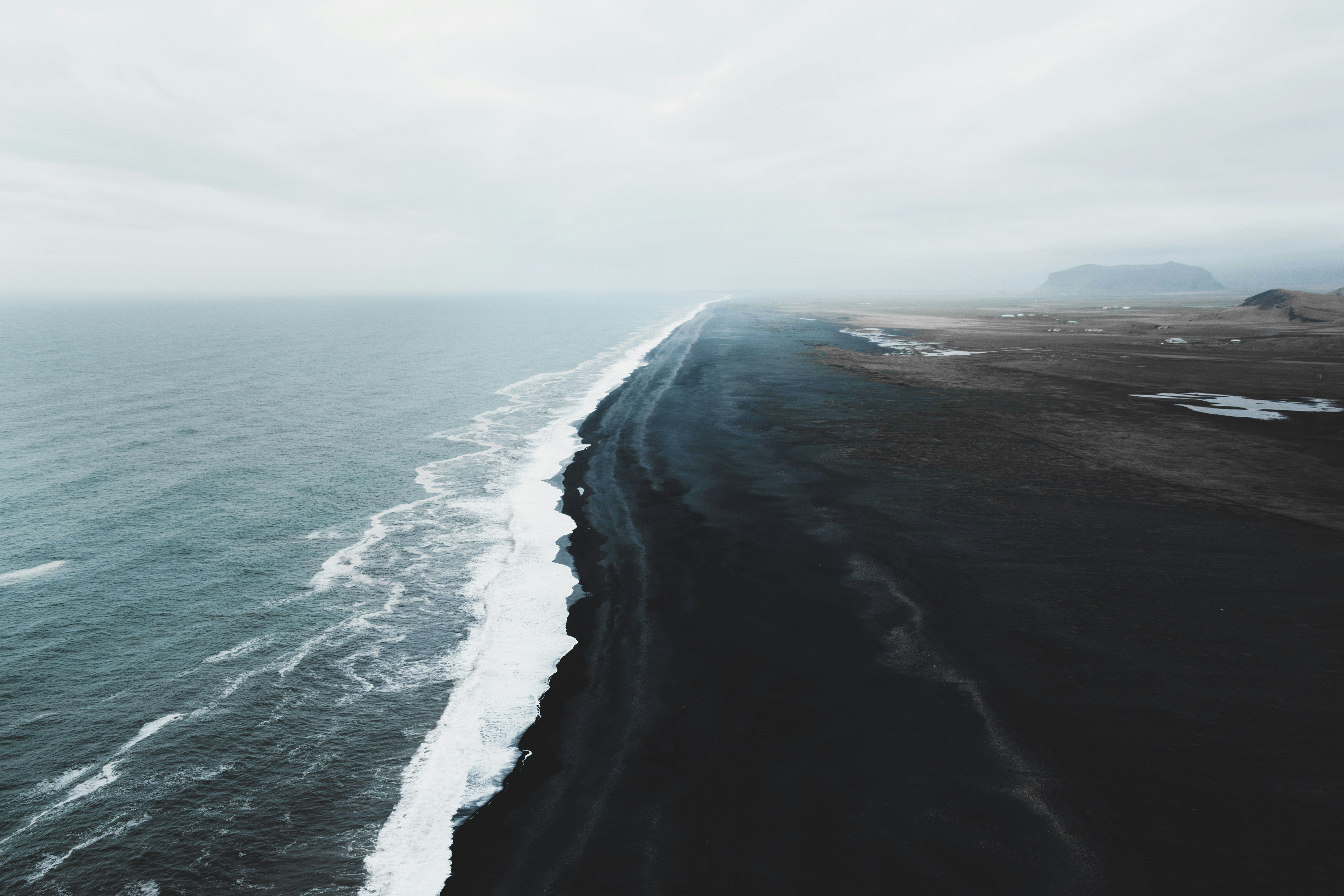
Near the village of Vík, Reynisfjara Black Sand Beach offers a moody, ethereal landscape. It’s frequently cited as one of the most beautiful non-tropical beaches in the world. All thanks to its massive basalt columns and the "Reynisdrangar" sea stacks rising from the sea.
There are plenty of things you can do near Iceland’s black sand beaches. Drive to the Dyrhólaey promontory to view the Reynisfjara Black Sand Beach from the top. From here, you can also see the famous stone arch and the large colony of puffins that visit every summer. You can also ride an ATV or an Icelandic horse to reach the nearby Solheimasandur Plane Wreck.
Glaciers and lagoons: Sólheimajökull & Jökulsárlón
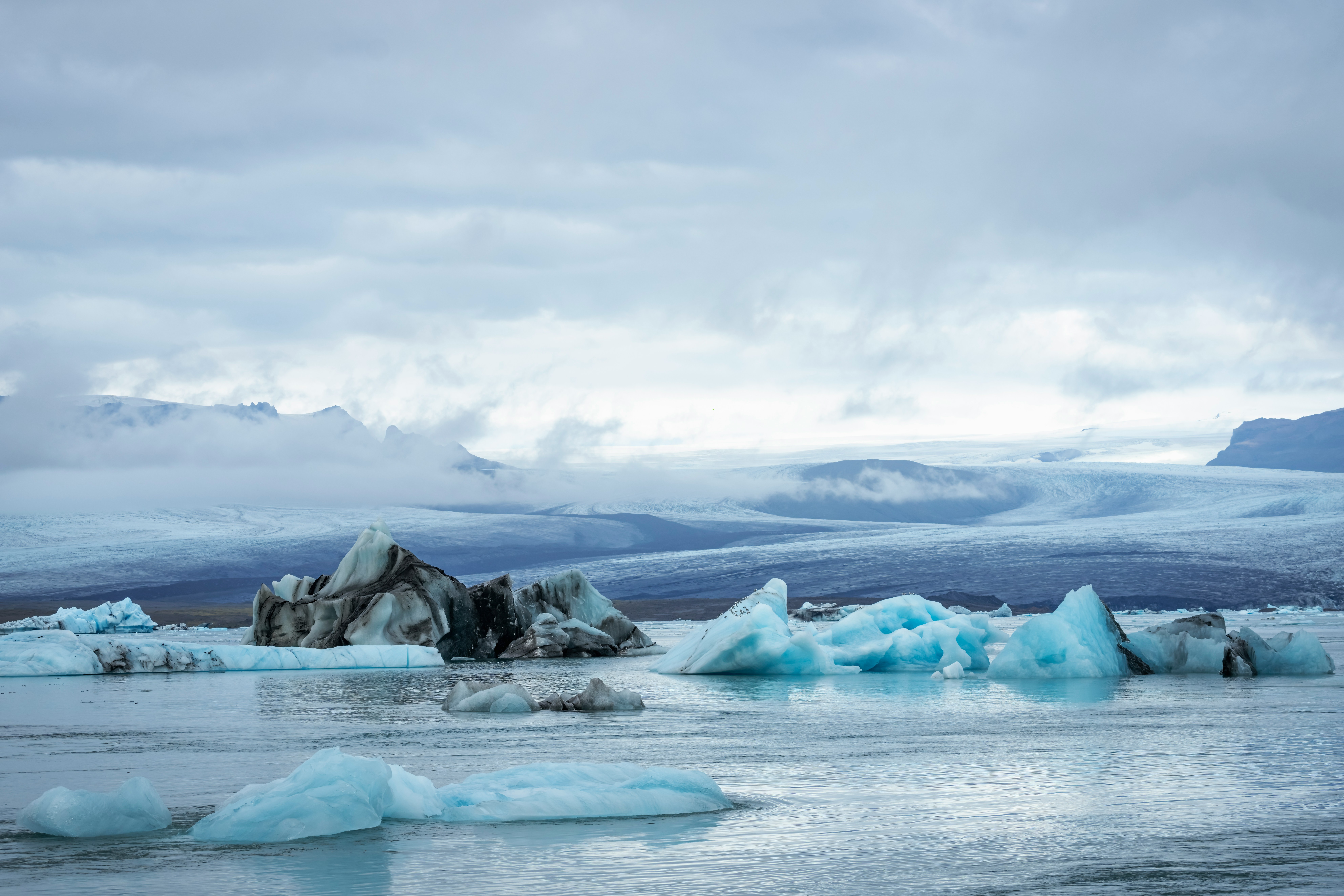
Further east, the scenery shifts from lava to ice. You can join a small group tour for a glacier hike on Sólheimajökull. For those willing to drive a bit farther, the Jökulsárlón Glacier Lagoon is a breathtaking sight. Here, blue icebergs break off the glacier and float toward the sea. Across the road is Diamond Beach, where these ice chunks wash up on the shore like glistening crystals. If you’re lucky, you might see a playful seal lying next to the icebergs.
Time Commitment: Short Loop or Open Road?
When comparing Iceland’s Golden Circle vs South Coast, time is your biggest constraint.
The Golden Circle is a very manageable day trip. Since the stops are close together, you can see all the highlights in about 6 hours. This leaves plenty of time for a slow dinner or a soak in a hot tub.
The South Coast requires more endurance. To reach Jökulsárlón Glacier Lagoon and back from the Selfoss area is a 10-hour commitment, with little to no stops. During the winter, when daylight hours are limited, you may only have enough light to reach Vík and back.
Crowds & Atmosphere
The Golden Circle is incredibly popular. Since it’s close to Reykjavík, it often hosts large tour buses. If you prefer small groups and a sense of solitude, you might find the Golden Circle a bit busy during peak hours.
The South Coast is also popular, but the attractions are more spread out. Once you get past Vík, the crowds thin out significantly. And you can truly feel the vastness of the Icelandic wilderness.
Top tip: If you want to visit the Golden Circle with fewer crowds, visit very early in the morning. Or explore the landmarks counter-clockwise (starting from Gullfoss), since tour buses often start with Þingvellir National Park.
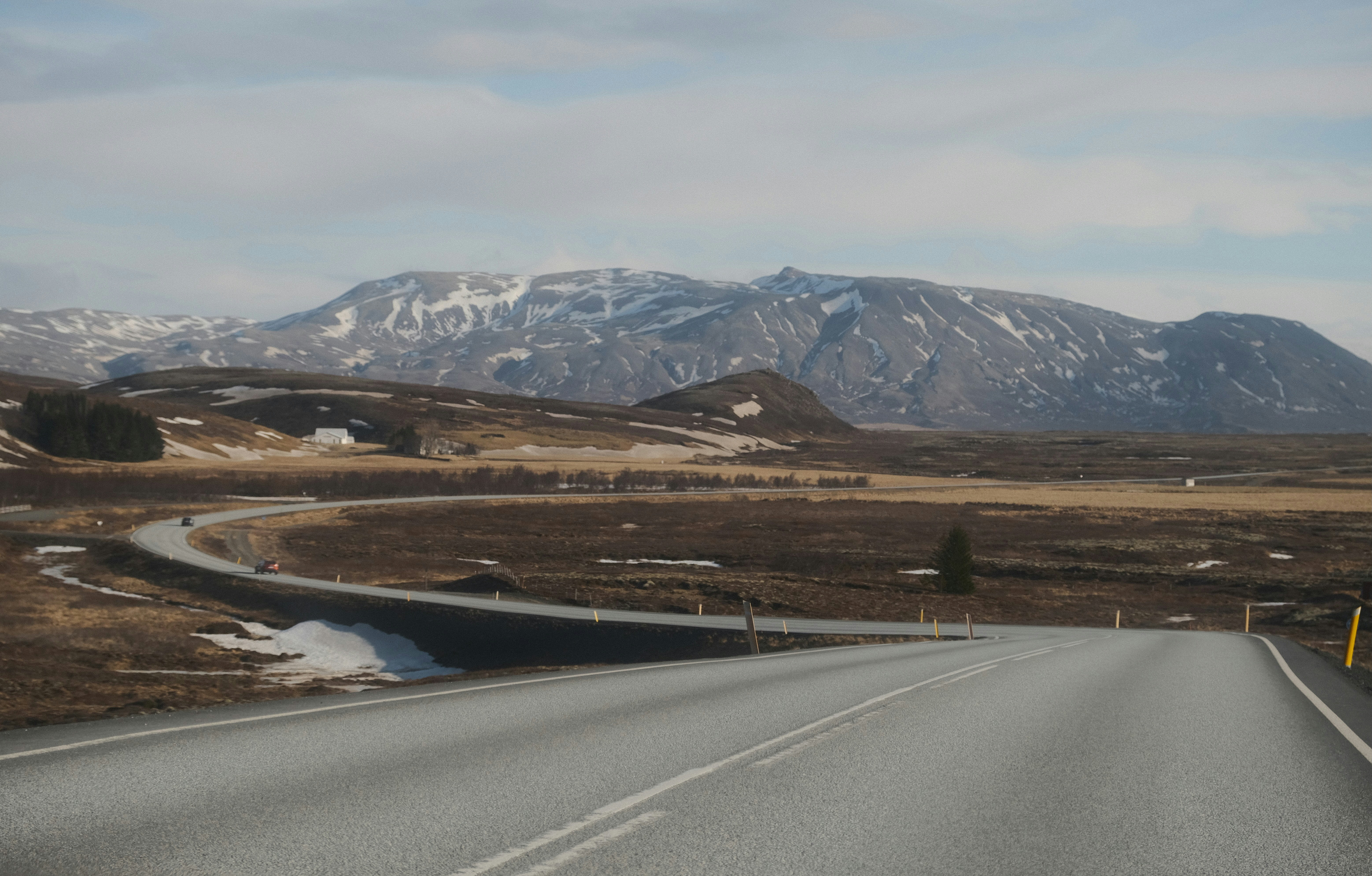
Weather & Driving Conditions
Both routes are generally well-maintained, but the South Coast is more exposed to the elements. High winds coming off the glaciers can make driving the Ring Road challenging, especially in campervans. The Golden Circle is slightly more inland and sheltered, making it a safer bet during stormy winter days.
Note: Always check the forecast before heading out, as Icelandic weather can shift in minutes.
Black Sand Hotel: Your Gateway to South Iceland
Choosing a central location is the secret to a stress-free trip. Instead of driving back to the capital every night, why not stay at a conveniently located South Coast hotel instead?
Black Sand Hotel in Ölfus is perfectly positioned for those who want to explore Iceland’s Golden Circle or South Coast. Drive 40 minutes north from the hotel, and you’ll reach the Golden Circle. Head east, and the South Coast is yours to explore.
Aside from its central location, Black Sand Hotel also offers:
Comfortable rooms: Black Sand Hotel’s rooms and suites feature a Scandinavian, nature-inspired aesthetic. Every ocean view room is furnished with premium DUX beds, ensuring you are fully rested for your next adventure.
On-site dining: After a day of exploring, guests can unwind at ÓMUR Restaurant & Bar. It serves local Icelandic cuisine with views of the volcanic landscape.
Wellness: The hotel’s spa and wellness facilities are designed for recovery, offering a peaceful space to watch the sea and sky.
Staying at the Black Sand Hotel allows you to experience Icelandic nature without the rush. You can enjoy the Golden Circle in the morning and be back in time for a beach walk by sunset. And maybe, just maybe, extend your trip and explore the South Coast the very next day.
So, Which Iceland Route Should You Choose?
The winner of Iceland’s Golden Circle or South Coast debate depends entirely on your travel style.
Choose the Golden Circle if you’re interested in history, have limited time, or want a classic introduction to Iceland's landscape. It’s efficient, educational, and undeniably beautiful.
Want to see black sand beaches, hike a glacier, or witness floating icebergs? The South Coast is the route for you. It requires more driving, but the rewards are some of the most photographed landscapes on earth.
Ultimately, the best way to see South Iceland is to avoid the rush. By basing yourself at a South Coast hotel like Black Sand Hotel, you can explore both routes freely and comfortably.
Still can’t decide where to go? Check out this perfect 3-day South Iceland itinerary that covers both the Golden Circle and the South Coast.
FAQs About Iceland’s Golden Circle or South Coast
Can you do both the Golden Circle and the South Coast in one day?
Technically, yes, but it’s a 12 to 14-hour commitment, and most combo tours spend very little time at each stop. It's better to pick one or split them over two days.
Which Iceland sightseeing route has better waterfalls?
The South Coast wins for variety. You have Seljalandsfoss (the one you walk behind) and the massive Skógafoss. The Golden Circle only has one major waterfall, Gullfoss, but it’s arguably the most powerful and impressive waterfall in Iceland.
Is the South Coast more dangerous than the Golden Circle?
Yes, primarily because of the coastal elements. The South Coast features Reynisfjara, home to lethal sneaker waves, and the driving distances are much longer. The Golden Circle is a well-paved, compact loop that is generally easier to navigate year-round.
How much time do I actually need for each Iceland route?
The Golden Circle can be done comfortably in 6–8 hours. The South Coast requires at least 10–12 hours just to reach Vík and back. If you want to include the Jökulsárlón Glacier Lagoon, you really need a minimum of two days to avoid burnout.
Which route is better for seeing the Northern Lights?
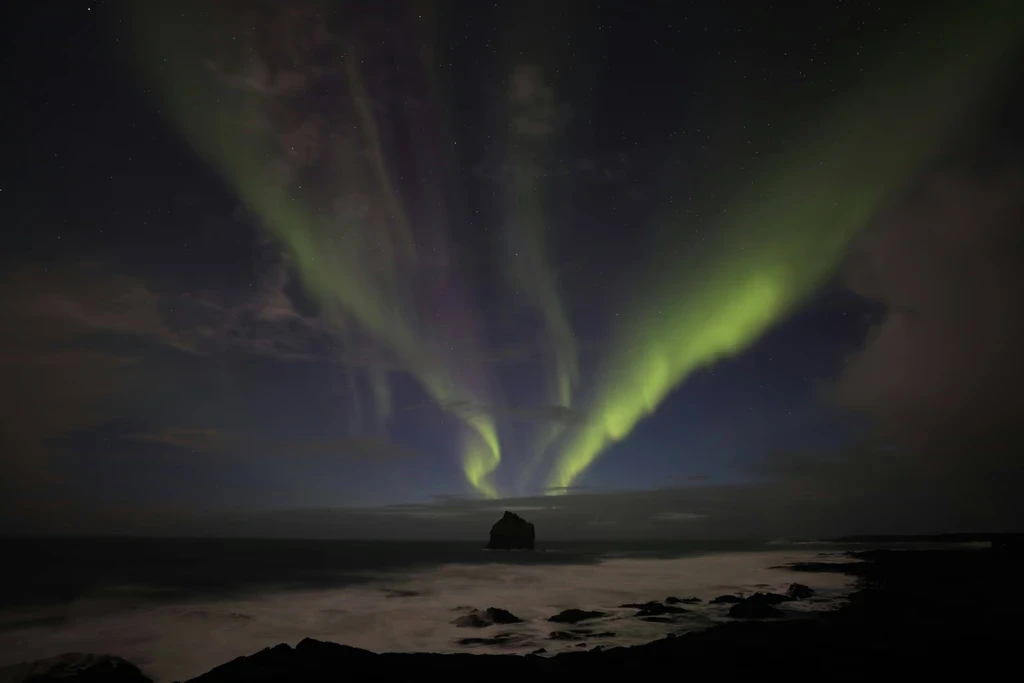
Neither Iceland’s Golden Circle nor the South Coast guarantees a sighting, as that depends on solar activity and cloud cover. However, the South Coast offers more dramatic foregrounds for Northern Lights photography, like the plane wreck or basalt columns.
Do I need a 4x4 for these Iceland sightseeing routes?
In the summer, 4x4 isn’t necessary, as both routes are on paved main roads. In the winter, a 4x4 is highly recommended for the South Coast due to high winds and rapidly changing snow conditions on the Ring Road. The Golden Circle is usually better plowed but can still be icy.
Which Iceland sightseeing route is less crowded?
The Golden Circle is the most visited route in Iceland due to its proximity to Reykjavík. While the South Coast is also busy, the landmarks are spread out over a much larger area, which can make it feel slightly less claustrophobic during peak hours.
blogs