" transform="translate(1.334 2)" width="13.333314731408331px"/><path d="M 0 2.667 L 0 0" fill="transparent" height="2.666640000000001px" id="nlKB6m7XS" stroke-dasharray="" stroke-linecap="round" stroke-linejoin="round" stroke-width="1" stroke="rgb(255, 255, 255)" transform="translate(8 8.667)" width="1px"/><path d="M 0.167 0.167 L 0.25 0.167 M 0.333 0.167 C 0.333 0.075 0.259 0 0.167 0 C 0.075 0 0 0.075 0 0.167 C 0 0.259 0.075 0.333 0.167 0.333 C 0.259 0.333 0.333 0.259 0.333 0.167 Z" fill="transparent" height="1px" id="G0jsljuaP" stroke-dasharray="" stroke-linecap="round" stroke-linejoin="round" stroke-width="1" stroke="rgb(255, 255, 255)" transform="translate(7.834 6)" width="1px"/></svg>)
" transform="translate(4 4)" width="8px"/></svg>)
Your perfect day in Reykjanes
One of the great things about staying at Black Sand Hotel is the convenience of its location. Whether you plan to tour the Golden Circle, head out and back along the scenic south coast of Iceland or backtrack to the Reykjanes peninsula – we’d recommend all three – you’re ideally positioned to do so. It’s the latter that will form the focus of this article. We’ll explore this wild and rugged region of Iceland and suggest how to get the most out of it as you begin to plan your perfect day in Reykjanes.
A note about the ongoing eruption
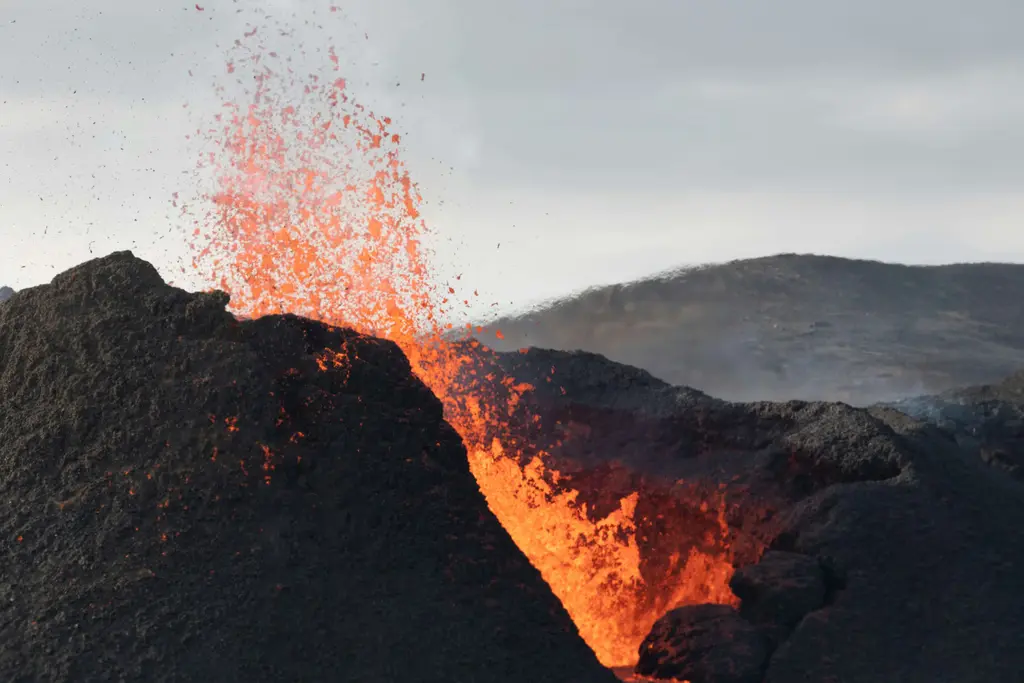
Since Mount Fagradalsfjall sprang to life in 2021 after a considerable period of dormancy, there have been spates of volcanic activity across a small part of the Reykjanes peninsula. To date, it has largely affected the area around the port of Grindavik, and during active eruption phases some roads are off-limits for safety reasons. However it’s important to understand that even when you can’t access the eruption zone, activity has been localised. Keflavik Airport, in the far north west of the peninsula, has remained open throughout. It makes sense to stay abreast of the current situation and take any temporary road closures into account when planning your day out in Reykjanes, but don’t let it put you off visiting this fascinating part of the country. Make use of online resources such as Road.is, RUV’s news updates in English and the Visit Reykjanes website to ensure you have up to date information.

Looping the peninsula
From Black Sand Hotel, it makes sense to loop around the perimeter of the Reykjanes peninsula as many of the must-see sights are located close to the coast. You might also wish to detour inland, for instance to the Blue Lagoon geothermal spa or, if you are travelling during Northern Lights season, to Aurora Basecamp – more on those later. You might also be wondering whether it matters whether you travel clockwise or anti-clockwise and, as with the ring road, it really comes down to personal preference. Of course, as with any Iceland plans, it pays to stay flexible. The weather may have a bearing on how long you spend in various parts of Reykjanes; if it’s cold, windy or rainy, then you’ll be pleased to learn that Keflavik has a number of excellent museums and visitor attractions which are indoors.
What to see on your Reykjanes road trip
Lakes Kleifarvatn and Grænavatn
The Reykjanes peninsula boasts some gorgeous lakes, the largest of which is Kleifarvatn. Unusually, this lake isn’t fed by streams; instead, the water source is underground. In one corner of the lake, the water is fed by a hot spring, making it warmer than the rest. The lake attracts photographers but also anglers, as there are plenty of fish here. Nearby Grænavatn is much smaller but its vivid colour is a huge draw for passing tourists. The green shade – which gives the lake its name – is the result of its high mineral content.
Seltún-Krýsuvík
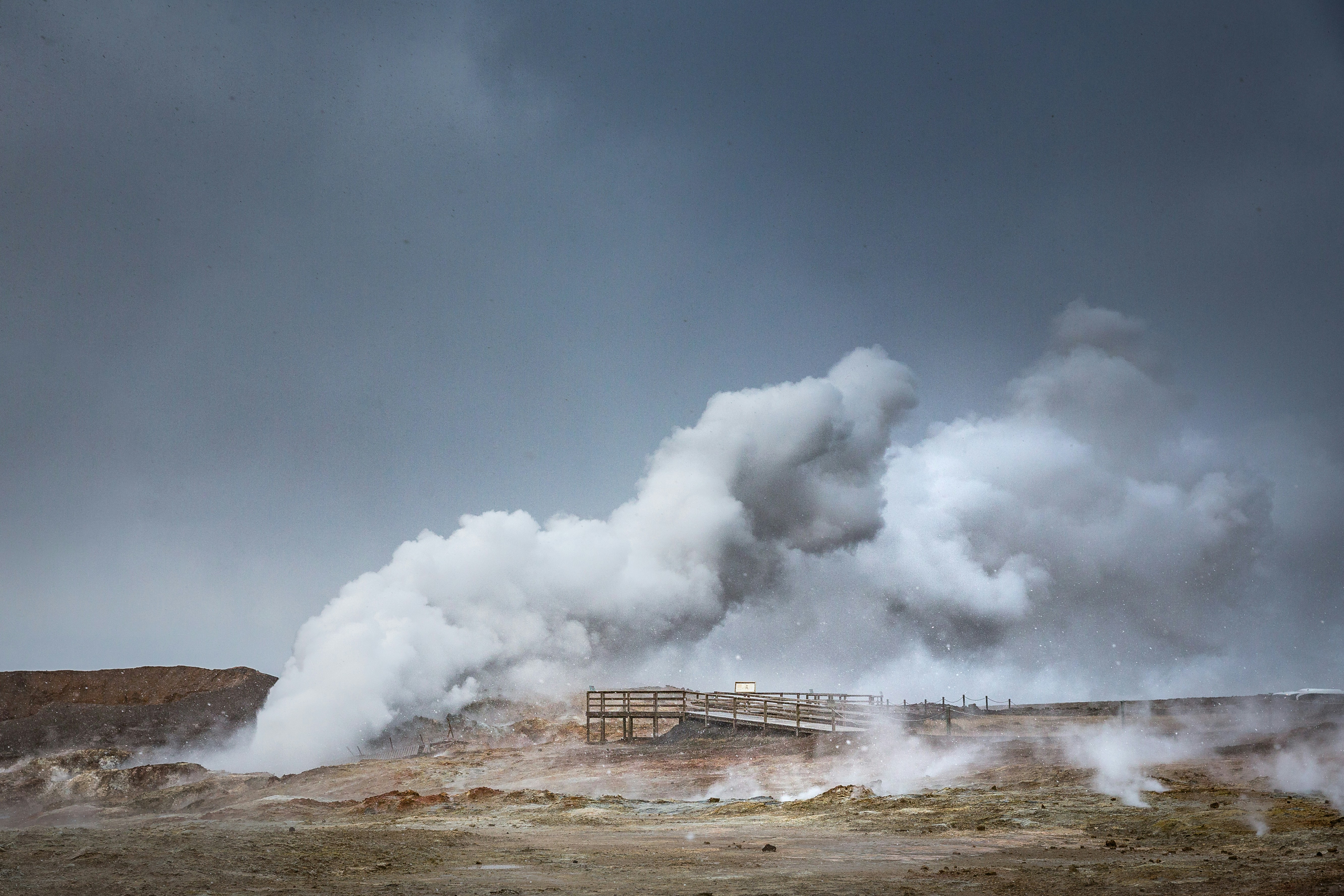
The remarkable landscape of the Reykjanes peninsula is classified as a UNESCO Global Geopark and one of the major reasons why it received this classification is because of geothermally active sites such as Seltún-Krýsuvík. Colourful and smelly, this place features an array of plopping mud pots, fumaroles belching steam and bubbling hot water springs. The stench of sulphur hangs in the air as you walk around the site on its wooden boardwalks – the views are extraordinary. Tread carefully and never venture off the paths as the scalding water has the potential to do some serious damage.
Selatangar
Life in Iceland in the past would have been very different. People lived and worked in challenging conditions in a number of professions including making a living from the sea. Once fishermen would have rested between shifts at Selatangar, exposed to the elements and riding out violent storms. By 1880 the place was deserted. All that’s left now in this desolate but captivating spot is a collection of ruined walls; history buffs will need to use their imagination to fill in the rest. Selatangar lies on the south coast of Reykjanes east of Grindavik and is reached by a rough track suitable for 4x4s.
Mount Fagradalsfjall
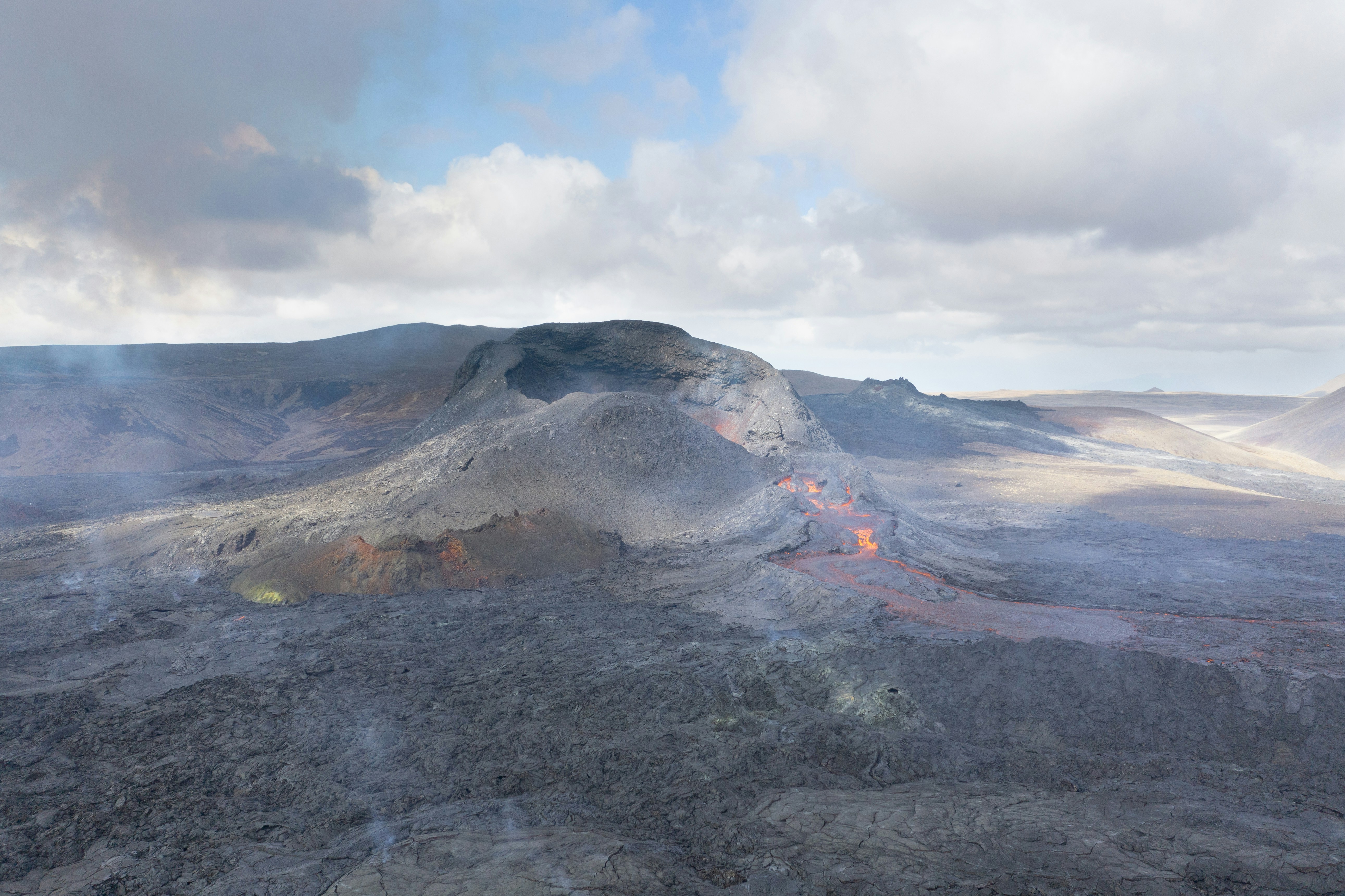
In 2021, a swarm of earthquakes close to Mount Fagradalsfjall signalled that something was up. Long dormant, the magma chamber began to fill and lava flowed through the valley for the first time in 8000 years. Visitors flocked here to hike to elevated vantage points overlooking the lava flows and craters that had formed. The lava has cooled now into a black stain on the landscape, but spattered with yellow deposits of sulphur it’s lost none of its appeal. It’s still a challenging hike, so if you’re keen to do it, you’ll need to allocate two days to exploring Reykjanes so that you don’t miss out on the rest of the peninsula. Check the current situation before you embark on your walk.
Brimketill
Nature can create the most jaw-dropping scenery and that’s definitely true here on the peninsula’s southern shore. Ancient lava flows once poured into the ocean at Brimketill and where the lava has solidified, the sea has set about eroding it into natural pools. Watching the water churning and foaming, not to mention the waves dramatically crashing over the rock is a breathtaking sight. Don’t be tempted to jump in for a swim, even if the water is unusually calm – the current here is dangerous and this place is never safe for a dip.
Gunnuhver
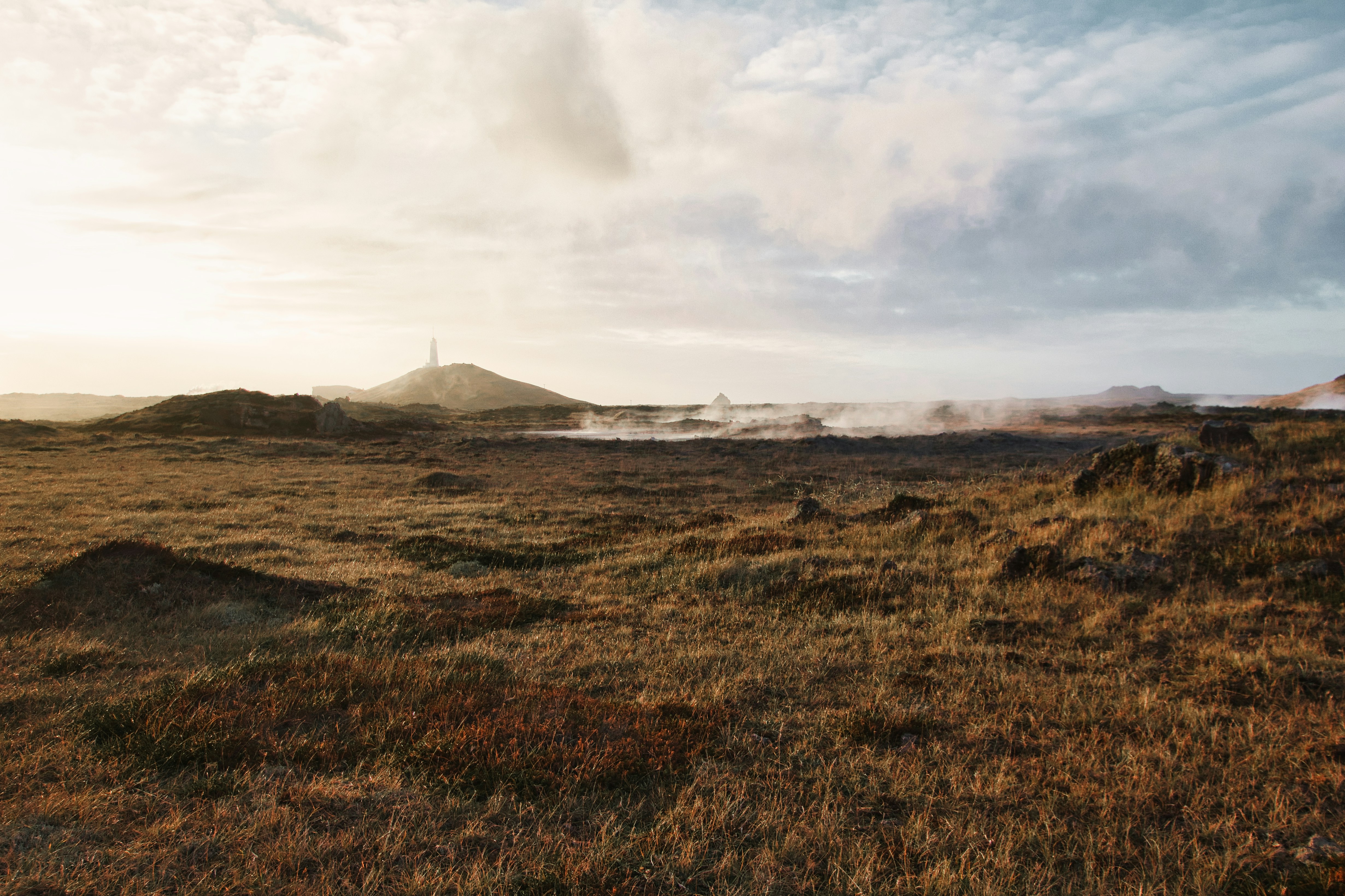
Iceland’s strewn with geothermally active areas but this one in the south west of the Reykjanes peninsula is a standout. It boasts the largest mud pool in the country, measuring an impressive 20 metres in diameter. Here, the volcanic rock has been altered into soft clay by steam and water, boiling vigorously for all to admire. Incidentally the name comes from a female ghost said to haunt this part of Reykjanes. Gudrun Önundardottir, Gunna for short, placed a curse on the area after falling foul of her landlord. So the folk story goes, she was lured into the hot pool and has remained there ever since.
Reykjanesviti and surroundings
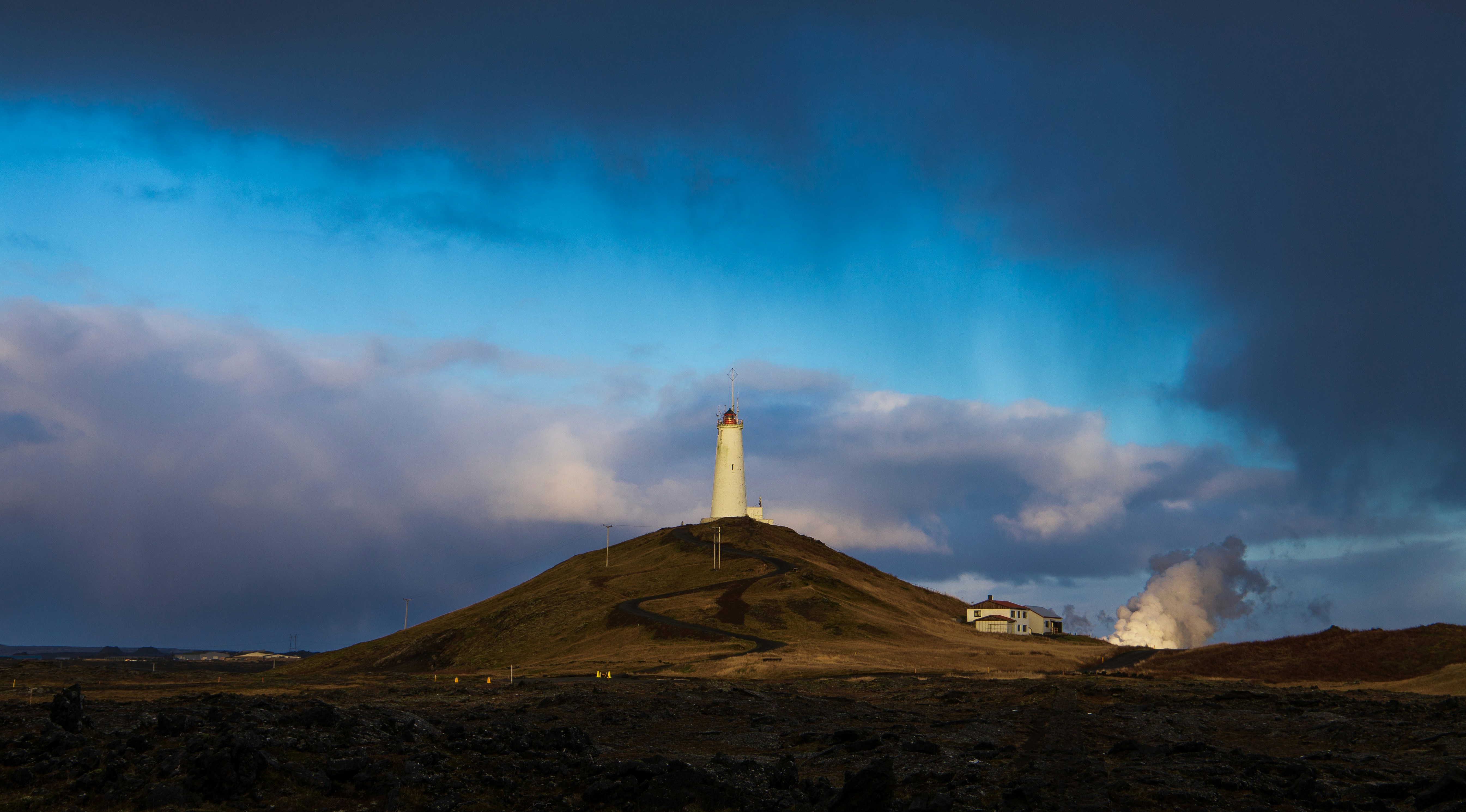
Reykjanes is a good place for birdwatching with seabirds in large numbers. They congregate on craggy coastlines such as Valahnúkur. Depending on the time of year you might spot a range of species including fulmars, guillemots, kittiwakes, gannets and puffins, who nest in the cliffs in considerable numbers. Once, you might also have seen a great auk, now extinct, a magnificent bird that’s commemorated by a bronze sculpture close to the ocean. In this remote, isolated and wild spot, it’s not hard to appreciate the dangers of the powerful waves that break over the rocks. It’s clear why Reykjanesviti lighthouse was needed to keep ships from being wrecked on this treacherous coast. The first structure to be built here in 1878 was Iceland’s first lighthouse; the current one on Bæjarfell hill dates from 1907.
Volcano Man keyboards
If you enjoyed the the Will Ferrell movie Eurovision Song Contest: the Story of Fire Saga, chances are you will have a different reason for coming to the south westernmost tip of the Reykjanes peninsula. The Volcano Man keyboards are a fan favourite and a must for a souvenir selfie. They’re looking a little weathered now after being out in the Icelandic elements for a few years but worth seeking out nevertheless. Loosen up your vocal chords if you’re going to want to burst into song.
Bridge between Continents
Drive north and you’ll soon come to the Bridge between Continents, sometimes referred to as Leif the Lucky’s bridge. Iceland sits on two tectonic plates – the North American and the Eurasian – and their boundary runs diagonally across the country from the south west towards the north east. Here, you can step out onto a metal bridge that spans the boundary. To the untrained eye at first it looks like you are standing above a dried up river bed, but in fact, you’ll have a foot in two continents at once.
Sandvik
There are a number of must-see beaches in Iceland, such as the red sands of Rauðasandur up in the Westfjords and of course the infamous Reynisfjara black sand beach near Vik on the south coast. Much of the Reykjanes coastline is rocky, but on its western edge you’ll find Sandvik. Heading north from Leif the Lucky’s bridge the road passes the Stampar craters, also worth a brief stop. This beach features a broad swath of black sand backed by grassy dunes. It played a starring role on the big screen in the 2006 Clint Eastwood movie Flags of our Fathers, when it stood in for Japan’s Iwo Jima.
Keflavik
The town – as opposed to the airport – of Keflavik is a useful destination should the weather turn inclement, as it’s home to a number of interesting museums. If you love music, then consider paying a visit to the Icelandic Museum of Rock and Roll, which tells the story of the country’s music scene. Considering the size of Iceland’s population, it has produced a number of successful artists, including Björk, Sigur Rós and Daði Freyr. Another fascinating museum with a completely different theme is Viking World. It centres on a replica of a Norse longship, the Gokstad, called the Íslendingur. This magnificent reconstruction sailed from Iceland to North America to commemorate the groundbreaking and ambitious voyages made by early settlers into what was then the unknown.
The Blue Lagoon
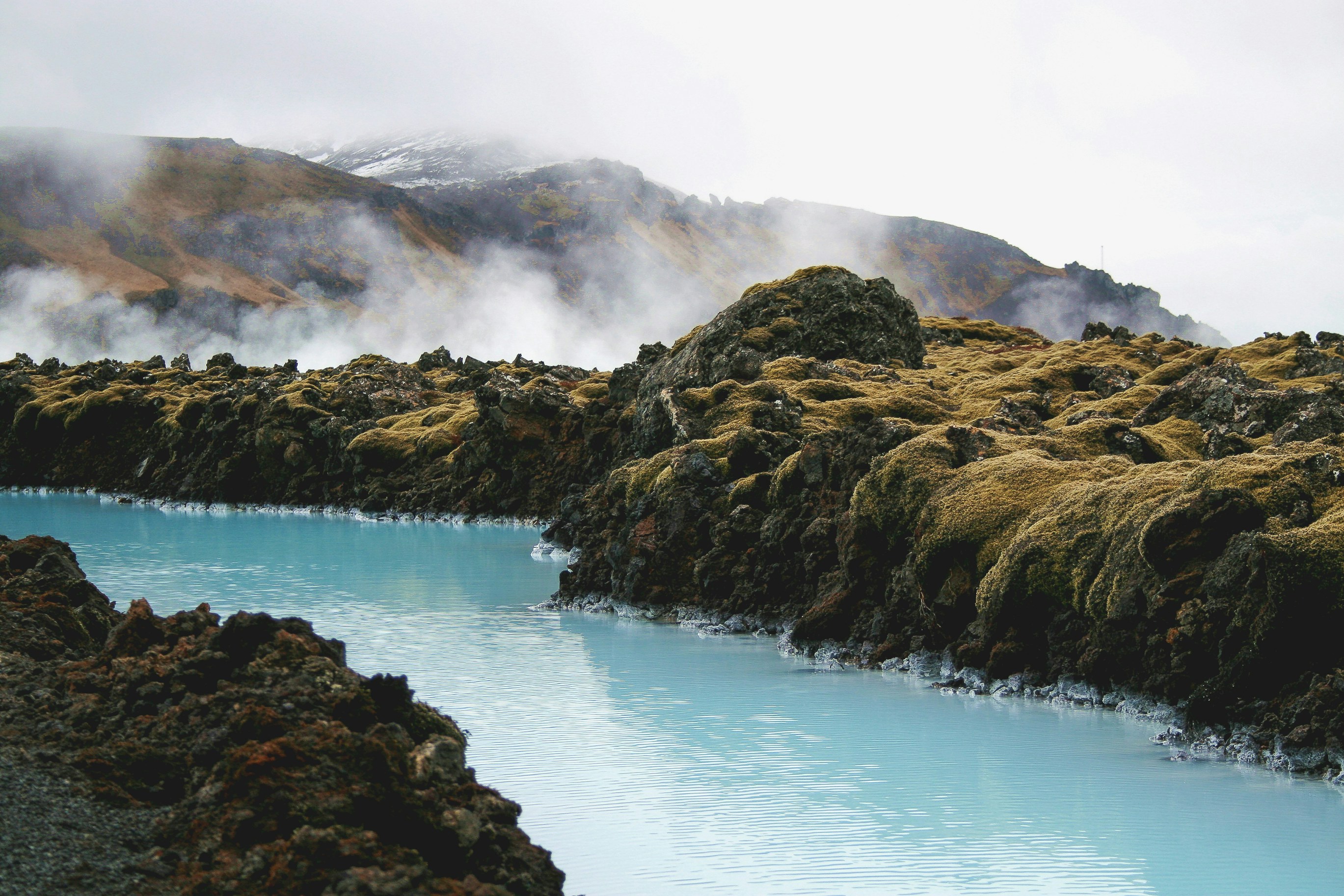
The Blue Lagoon is probably Iceland’s most famous geothermal spa. This luxurious lagoon was originally established to capitalise on the waste hot water from the nearby geothermal power plant but has become a popular attraction in its own right. The glorious milky blue of its water offsets the charcoal black lava that surrounds it to perfection. With a swim up bar, facial and body pampering treatments and a top-class restaurant, this has become a destination in its own right and a must for any visitor to Reykjanes. It’s a fitting way to end a perfect day in Reykjanes, though it’s advisable to book ahead during busy periods.
Aurora Basecamp
If you’re visiting during Northern Lights season it’s worth considering a visit to Aurora Basecamp. Tucked away in a dark spot within the eastern part of the peninsula, you might call it a training camp for wannabe aurora hunters. Here, your guide will welcome you into a cosy dome where you’ll be taught the basic science behind the Northern Lights and explore how to interpret the data to understand what your chances are of a sighting. It’s all very informal, with plenty of opportunity to head outside and put what you’ve learnt into practice or hang out beside the fire with a hot drink. Coming here early in your stay at Black Sand Hotel will give you the skills needed to continue your Northern Lights hunt in the more remote parts of the south coast, far from any light pollution.
blogs